Specifying wholesale natural stone supplier for Wholesale and OEM Orders
Procurement for large-scale infrastructure requires a balance between material density and structural integrity. When sourcing natural stone for courtyard walls, the primary failure point is the variance in moisture absorption rates which dictates the thermal expansion of the stone. Low-grade batches often exhibit rapid degradation under freeze-thaw cycles, leading to surface spalling within the first two seasons.
| Parameter | Standard Grade | Premium Reinforced Grade |
|---|---|---|
| Compressive Strength | 40-60 MPa | gt 80 MPa |
| Water Absorption | lt 3.0% | lt 1.5% |
| Frost Resistance Cycle | Class 2-3 | Class 4 |
Where Cheaper Alternatives Fall Short
Lower-cost suppliers often prioritize visual aesthetic consistency over internal mineral density. This frequently results in stone with high micro-fissures that are invisible to the naked eye but fail under hydraulic pressure. Over time, water enters these fissures, expands upon freezing, and leads to delamination of the outer layer of the wall face.
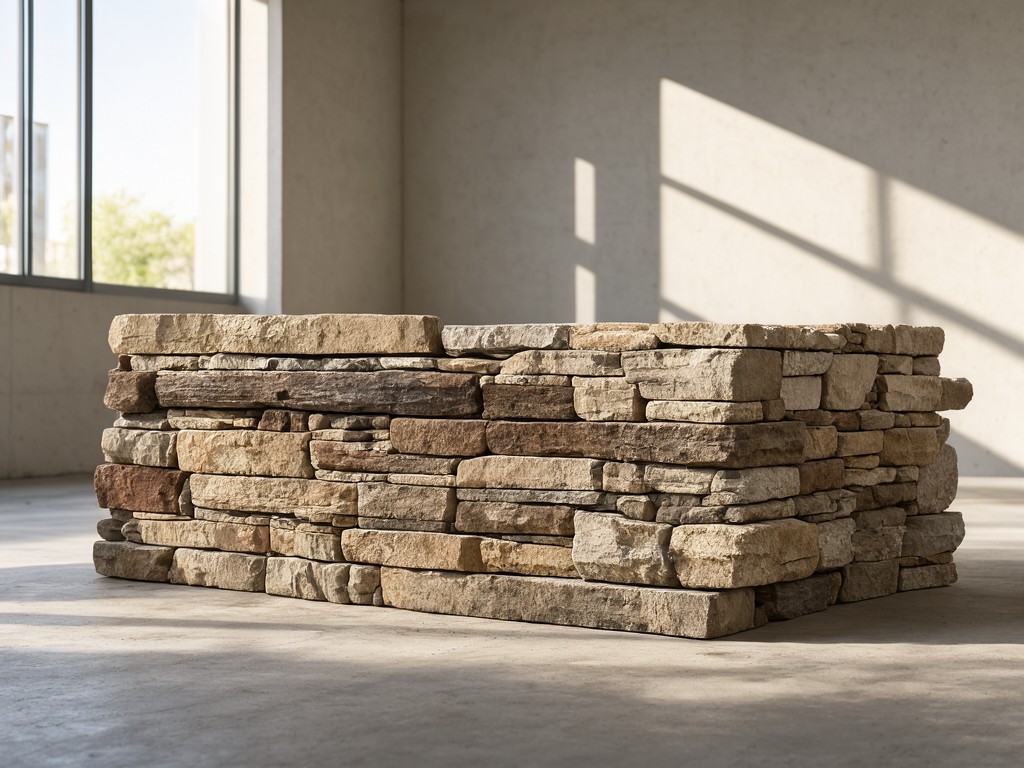
Consistency in the batch density is the most critical metric for wholesale contracts. If the stone mineral composition varies significantly between shipments, the chemical reaction with the mortar will be inconsistent, leading to uneven curing and weakened structural joints across the entire courtyard perimeter.
How It Performs in Use
Load Resistance
High-density natural stone ensures the courtyard wall maintains its vertical alignment under significant lateral pressure from soil back. This is vital for high-traffic urban developments.
Weather Stability
Low porosity rates prevent the growth of moss and lichen within the stone matrix, maintaining the original finish without the need for aggressive chemical cleaning.
Matching the Product to the Buyer
The choice of finish directly impacts the coefficient of friction on the wall surface. A split-hwn surface provides higher slip resistance for pedestrian zones, whereas a honed finish may be required for high-end commercial aesthetics. Procurement officers must align the surface texture with the specific safety rating requirements of the site location.
Weight is also a hidden cost in logistics and installation. Selecting a 50mm thick stone cladding requires significantly more heavy machinery compared to a 30mm veneer, which affects the total project cost-per-square meter.
Buying Mistakes That Lead to Returns
- Ignoring the specific gravity of the stone, which leads to under-specification of structural foundations.
- Failing to verify the salt-crystallization resistance, resulting in white surface staining in coastal environments.
- Accepting batches with high color variance that exceeds 5%, causing a patchwork effect upon installation.
Customisation Options and Their Limits
Custom edge profiles and precision-cut dimensions are available to meet specific architectural blueprints. However, every mechanical cut increases the risk of edge-chipping, so we limit the complexity of geometric patterns to ensure the structural integrity of the stone remains remains intact.
Inspection Items and Test Methods
Every batch undergoes ultrasonic pulse velocity testing to detect internal voids or cracks. We also perform abrasion resistance tests to ensure the stone meets the specified durability for outdoor exposure. These tests ensure that the material delivered matches the technical performance promised in the contract.
Questions Ask Before Ordering
What is the lead time for custom-cut orders?
Custom orders typically require 8 to 12 weeks depending on the specific quarry source and the precision CNC machinery availability.
Can we receive a sample slab for batch approval?
Yes, we provide limited-run samples from the specific quarry block to verify color and texture before mass production begins.