china rustic slate walling supplier: What Buyers Should Check Before Ordering
Total cost of ownership shifts once returns are counted. When sourcing large-scale masonry projects, the initial price per tonne often fails to account for the breakage rate inherent in poor-quality split-stone processes. A reliable rustic slate walling supplier must provide data on the natural cleavage planes of the stone to ensure the material does not delaminate into thin layers during the first freeze-thaw cycle.
Procurement officers should evaluate the mineral density and water absorption rates of the stone. High-porosity slate leads to spalling in humid climates, whereas a dense, low-absorption slate ensures the facade maintains its structural profile over decades of exposure to environmental stress.
What This Product Is and Where It Fits
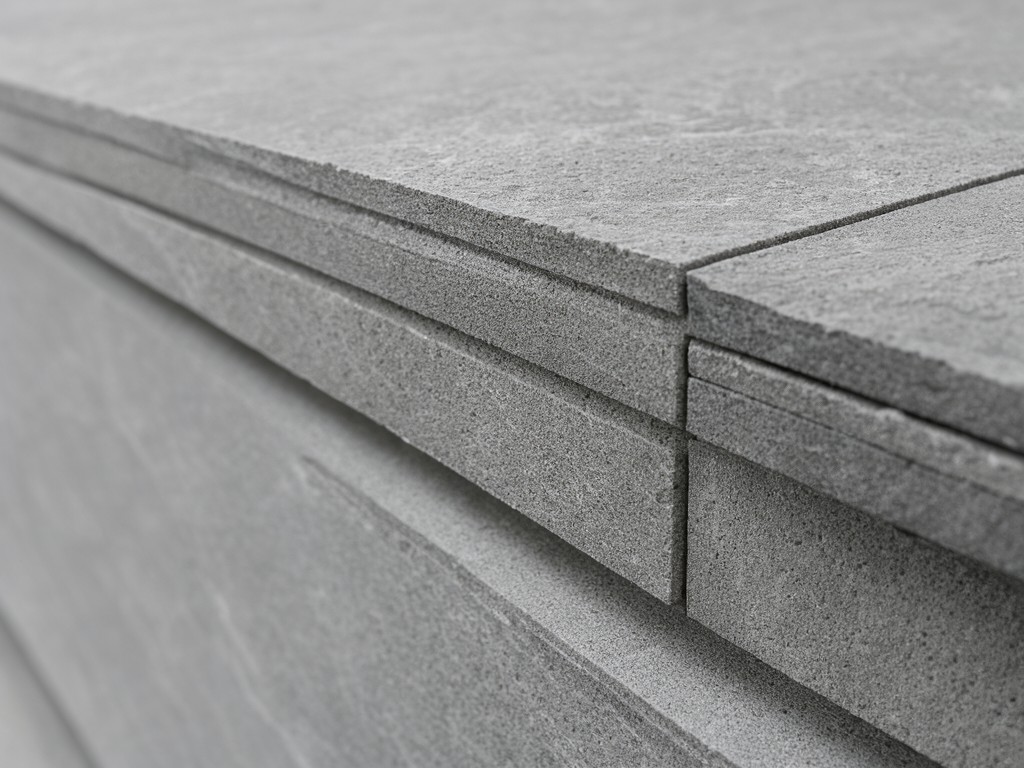
Rustic slate walling consists of natural stone slabs split along their natural bedding planes to provide a textured, irregular face. Unlike machine-cut tiles, these pieces utilize the inherent geological properties of slate to create a variegated aesthetic. This material is primarily specified for exterior cladding, retaining walls, and architectural feature elements where a natural, non-linear finish is the requirement.
The stone is categorized by thickness and color palette, typically ranging from charcoal grey to deep iron and ochre. For commercial architectural applications, the stone is often fixed to a substrate using mechanical anchors, whereas structural retaining walls require thicker-format stone to withstand hydrostatic pressure and soil movement.
How It Performs in Use
Performance is dictated by the bond strength of the stone and the consistency of the split edges. Because rustic slate is a natural product, variations in thickness are expected, but professional-grade material must maintain a tolerance within +/- 5mm to allow for uniform installation patterns. If the stone is too brittle, the mortar-setting process causes chipping, leading to high labor costs and material waste.
Under thermal stress, the stone's resistance to expansion is the primary metric. High-quality slate possesses a high quartz content, which prevents the surface from "chalking" or flaking off when exposed to intense UV radiation or rapid temperature fluctuations.
What Can Be Customised and What Cannot
Customization focuses on the dimensional format and the surface treatment rather than the material itself. We can provide specific lengths, widths, and "split-face" vs. "riven-face" finishes to meet precise architectural requirements. However, the geological composition and the natural color hue cannot be altered, as these are determined by the quarry site extraction.
Available Configuration Options
- Thickness variants: 15mm, 20mm, 30mm, 40mm, and 50mm.
- Edge treatments: Natural split-edge, square-cut (veled), or chamfered edges.
- Surface texture: Rough-riven, smooth-honed, or precision-holed for cladding systems.
- Format: Random-stack, linear (uniform height), or custom-cut rectangular dimensions.
Working as a Production Partner, Not a Catalogue Supplier
Tooling amortisation decides the pricing for large-scale projects. We do not operate as off-the-shelf vendors; instead, we align our quarry extraction process with your project's volume timeline. This involves a technical review phase where stone samples are tested for moisture resistance, color consistency, and dimensional variance before the first pallet is palletized for shipment.
Quality Control and Batch Consistency
Consistency is managed through rigorous batch-tracking. Each shipment is indexed by its moisture content and structural integrity to ensure that the stone profile remains uniform across different project phases. We utilize visual inspection and mechanical testing to identify hidden fractures or internal fault lines that could lead to structural failure during the installation phase.
| Parameter | Standard Specification |
|---|---|
| Water Absorption | <0.5% by weight |
| Compressive Strength | Min 30 MPa |
| Dimensional Tolerance | +/- 5mm on thickness |
| Frost Resistance | Class 4 (No scaling) |
Volume Planning and Lead Time
Lead times are contingent upon quarry capacity and the specific split requirements. Large-scale orders require a 6-week lead time to ensure the stone is sourced from a single geological seam, preventing color mismatch between different delivery phases.
| Order Volume | Estimated Lead Time |
|---|---|
| Sample/Prototype | 10-14 Days |
| Standard Order (20-50T) | 4-6 Weeks |
| Project Scale Scale (>200T) | 8-12 Weeks |
Export Packaging and Handling Protection
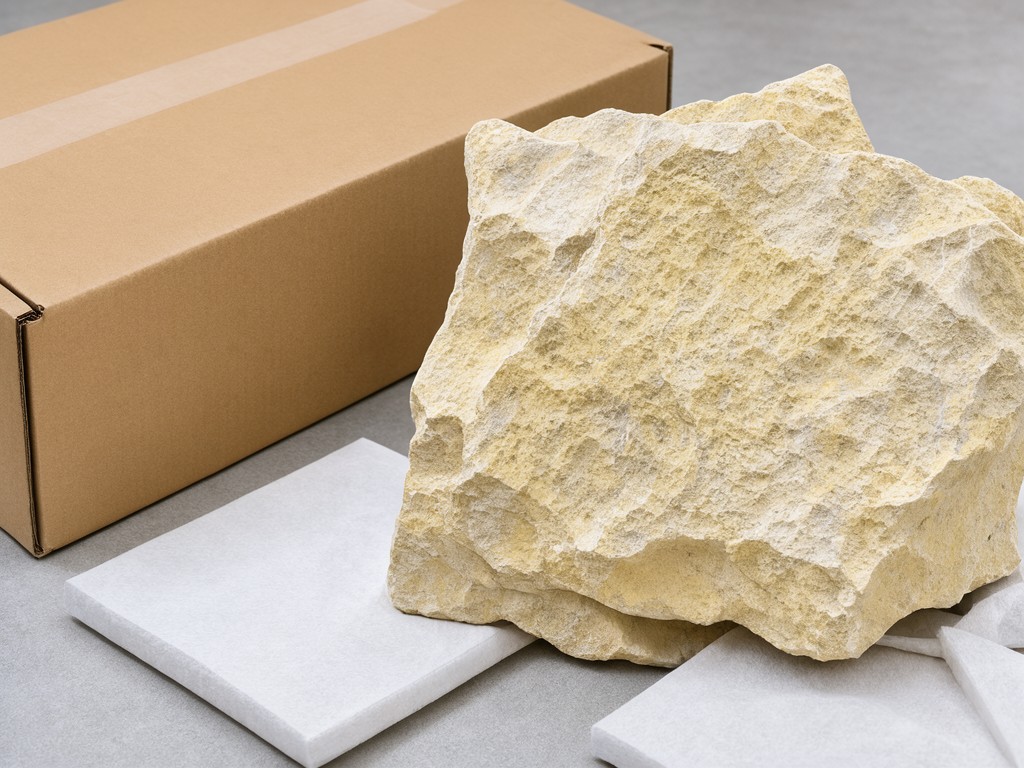
Structural integrity is maintained through industrial-grade palletization. We utilize heat-treated timber crates with internal steel strapping to prevent lateral shifting during ocean freight. For thinner-format slate, pallets are shrink-wrapped in moisture-barrier film to prevent salt efflorescence or organic growth during long-duration transit.
Care, Storage and Service Life
When properly installed, rustic slate has a service life exceeding 50 years. Maintenance involves simple low-pressure washing; avoid acidic cleaners that can etch the natural mineral surface. On-site storage must keep the stone on a level, breathable surface to prevent moisture-wick which can cause staining on the lower stone faces.
Ready to review technical specifications for your next project?
Request Artwork and Branding Review