Wholesale Slate Stone Cladding Supplier - Bulk Supply and Specification Guide
Rapid thermal expansion cycles are often the primary cause of mechanical failure in natural stone facades. When slate is split with inconsistent thickness or internal fissures, moisture ingress occurs during freeze-thaw cycles, the structural integrity of the cleave is compromised. This leads to delamination where the decorative surface layer shears away from the substrate. For distributors and importers, the risk is not just the aesthetic degradation of the stone, but the liability associated with cladding panel failure on large-scale architectural projects.
Material consistency across multiple shipping lots depends on the geological density and the precision of the mechanical-splitting process. High-density slate offers a lower water absorption rate, which is critical for preventing frost-induced cracking. If a supplier provides material with high porosity or uneven thickness tolerances beyond ±2mm, the installation team struggles to maintain a flush plane, resulting in increased labor costs and high waste rates that erode profit margins for the retail buyer.
Technical Specification Quality Control and Tolerance Standards
Before bulk production, we evaluate the variance of the stone's natural cleavage plane to ensure flat-bed compatibility. We monitor the moisture content and mineral tensile strength to guarantee that the cladding will not warp during transit in high-humidity environments.
Scope of Supply and Physical Form
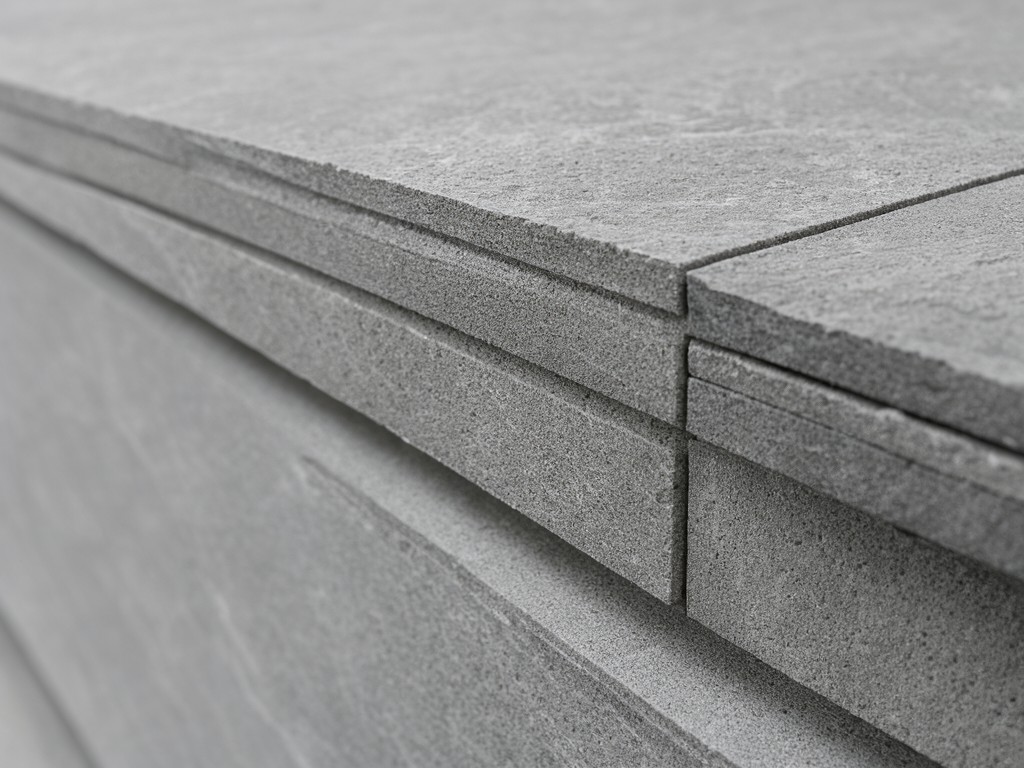
The physical geometry of the cladding dictates the application and the fastening requirements. Natural-edge split slate provides a textured aesthetic suitable for rustic residential projects, whereas precision-cut edges are manufactured using diamond saws for modern commercial curtain wall systems. The choice between these formats affects the weight-per-square-meter, which is a critical factor for structural engineers calculating the load-bearing capacity of the building's frame.
- Thickness ranges typically from 3mm for lightweight internal cladding to 30mm for heavy-duty structural facades.
- Surface finishes include natural split, abraded, or honed textures to meet specific light-reflection requirements.
- Format options include standard rectangular tiles, hexagonal patterns, or irregular mosaic-style loose stone.
What the Design Has to Balance
Architectural specifications often balance the visual depth of the stone against the mechanical limits of the installation. Thinner slate panels reduce the dead load on the structure but are more susceptible to impact damage during the site handling. Conversely, thicker slabs offer superior durability against physical impact but require more robust mechanical fixings rather than simple adhesive systems, which increases the total cost per square meter for the end-user.
Split-Edge Variety
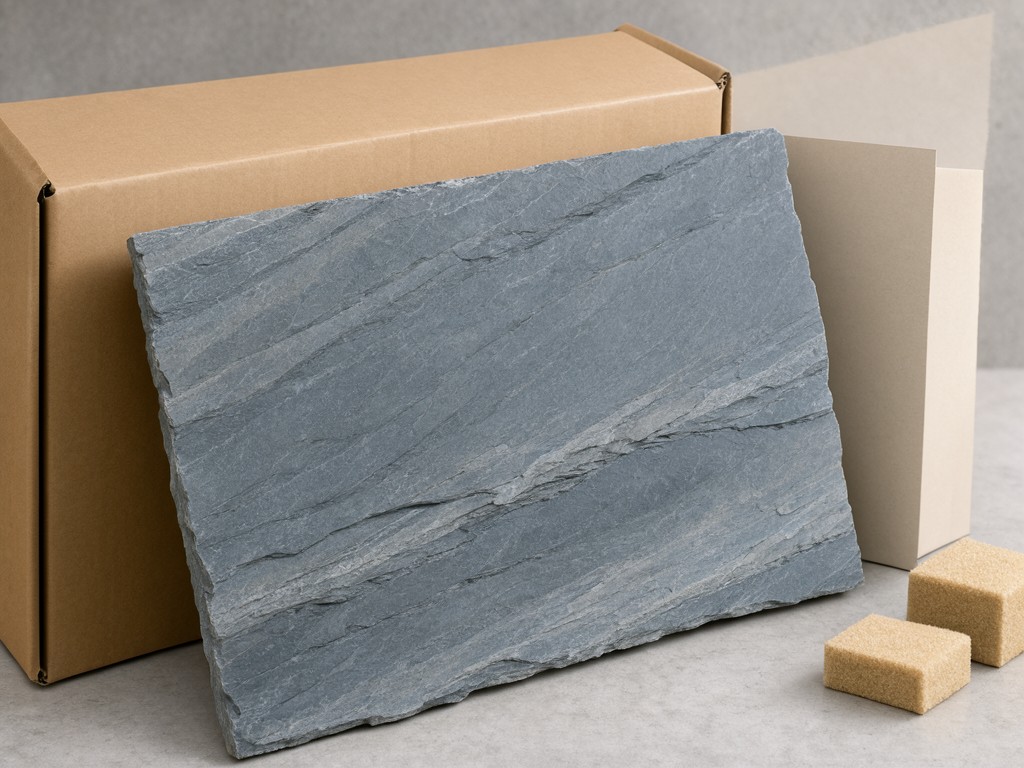
Utilizes the natural fracture of the stone. Best for organic-looking designs where slight thickness variation is accepted as a design feature.
Machine-Cut Precision
Precision-cut via CNC wire saw. Required for contemporary architectural where where straight lines and uniform joint widths are mandatory.
Construction Method and Its Effect on Consistency
The extraction and processing method determines the fatigue resistance of the stone. Traditional mechanical splitting follows the natural bedding planes of the slate, which maintains the mineral's inherent bond. However, high-speed saw cutting can sometimes introduce micro-fractures that are not visible to the naked eye but manifest as cracks once the stone is exposed to UV radiation and thermal fluctuations over several years of installation.
| Parameter | Standard Grade | Premium Grade |
|---|---|---|
| Thickness Tolerance | ±3.0mm | ±1.0mm |
| Water Absorption | lt 0.5% | lt 0.2% |
| Color Uniformity | Natural Varied | Sorted Toned |
How to Choose Before Requesting a Quote
Procurement begins with a clear definition of the environmental exposure. Slate used for a coastal environment requires higher salt-spray resistance than slate used for an interior feature wall. We require bulk buyers to provide the specific wind load and thermal requirements of the project to determine the appropriate thickness and fixing system compatibility. This prevents the common mistake of ordering material that fails structural code inspections during the on-site installation phase.
Buying Mistakes That Lead to Returns
The most frequent error in wholesale sourcing is failing to verify the batch-to-batch consistency of the stone density. A single sample piece often masks structural weaknesses that appear in a full container load. Furthermore, ignoring the orientation of the natural grain during installation can lead to premature shearing. If the stone is installed with the grain perpendicular to the gravity vector, the risk of mechanical splitting under its own weight increases significantly.
How Consistency Is Held Across Batches
Consistency is maintained through rigorous quarry-side sorting and batch-tracking. By sourcing from specific strata within the geological formation, we ensure that the mineral composition and color profile remain stable across multiple orders. This is vital for distributors who need to supply a large project over a six-month period where visual matching between shipments is a mandatory requirement from the architect.
Stock Availability and Reorder Planning
Lead times for slate cladding are influenced by the seasonal nature of quarrying and splitting capacity. We maintain a baseline inventory of high-demand formats to mitigate shipping delays for our retail partners. For custom-cut orders, we recommend a 12-week lead time to account for the precision cutting and quality inspection cycles required for bespoke specifications.
Need technical data or wholesale pricing for your next project?
Contact our technical department for bulk specifications