wholesale sandstone wall cladding supplier: What Buyers Should Check Before Ordering
Structural integrity in natural stone applications depends on the density and water absorption rates of the specific sedimentary layer. In high-volume procurement, the primary failure mode reported is surface spalling caused by freeze-thaw cycles when moisture penetrates a porous matrix. We source sandstone variants with a low-coefficient of expansion to ensure the cladding face maintains its dimensional stability and does not delaminate after 24 months of exposure to fluctuating temperatures.
| Parameter | Standard Range | Testing Metric |
|---|---|---|
| Compressive Strength | 40 - 80 MPa | ASTM C644 |
| Water Absorption | 2% - 6% | Weight-gain % |
| Flexural Modulus | 5 - 15 MPa | Point-load test |
How to Choose Before Requesting a Quote
Procurement for large-scale developments requires evaluating the trade-off between aesthetic finish-consistency and abrasion resistance. A honed finish offers color uniformity but increases the surface area for particulate accumulation, which can lead to maintenance cycles in urban environments. Conversely, split-face or rock-textured surfaces provide natural protection against impact but require higher tolerances in the substrate preparation to avoid uneven shadow lines.
Batch traceability is critical for color-matching projects. Variations in iron oxide content between quarries can result in visible hue shifts across a single facade if not managed correctly. We categorize inventory by quarry-block to ensure that a 500-square meter order remains within a narrow Delta E color tolerance range.
Honed / Polished
- High dimensional precision
- Susceptible to acid staining
- Best for interior-end cladding
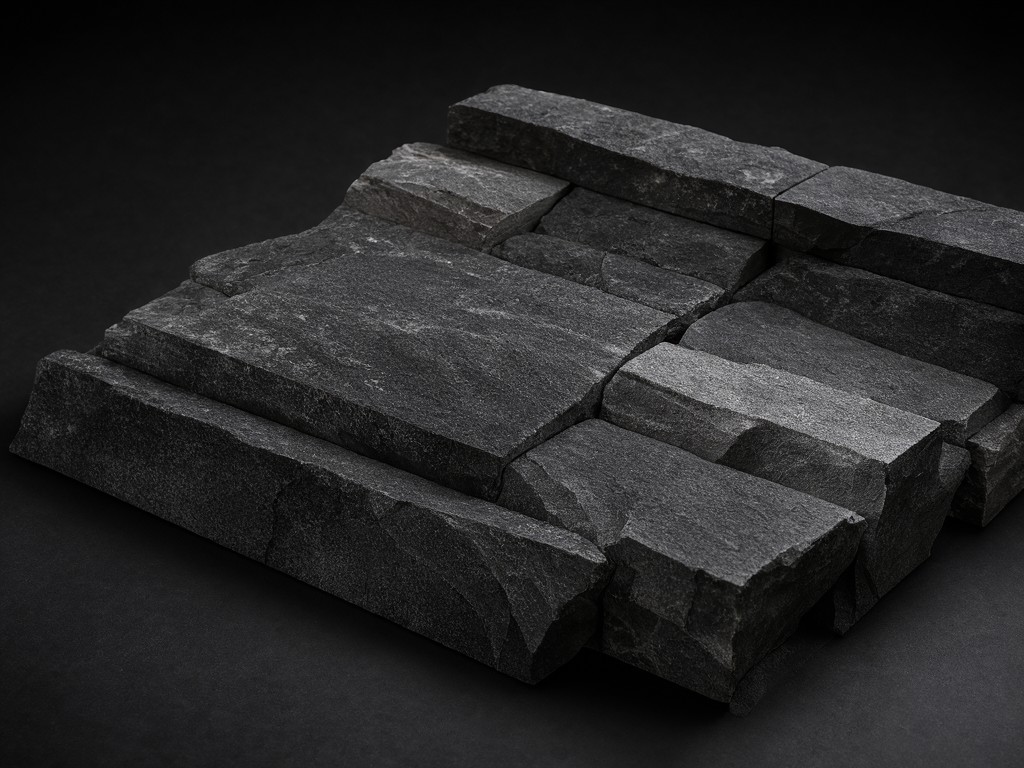
Split-Face / Raw
- High impact resistance
- Hides substrate irregularities
- Ideal for exterior thermal mass
What Can Be Customised and What Cannot
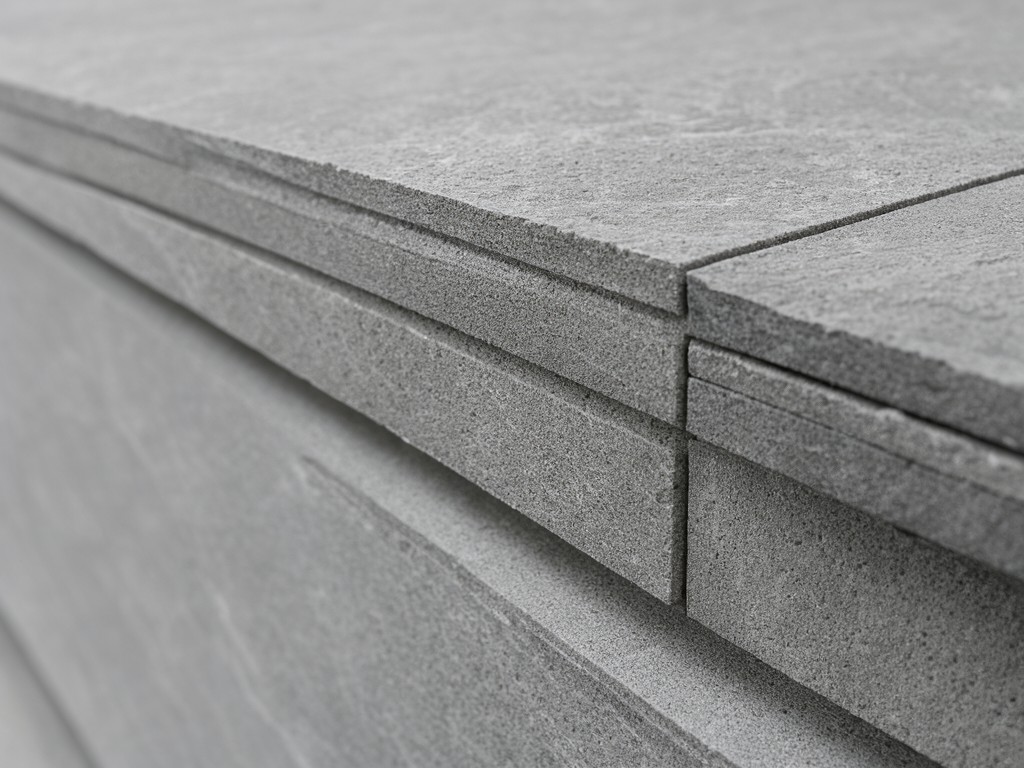
Customization focuses primarily on edge-profile geometry and thickness precision. We provide CNC-cut edges for specific architectural patterns, ensuring that joint widths remain consistent within a 1mm tolerance across-site. However, the natural veining and mineral composition of the sandstone cannot be altered; any attempt to chemically tint the stone deep enough often compromises the structural integrity of the outer silicate layer.
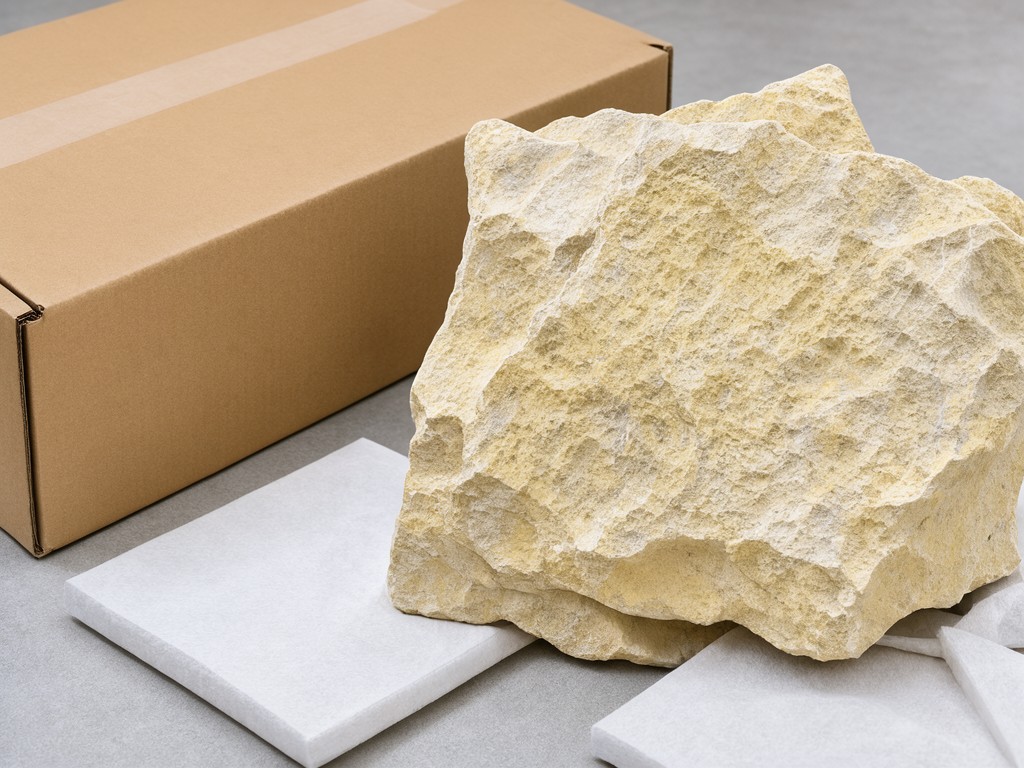
Logistical requirements vary based on the complexity of the cut. Standard rectangular tiles are palletized in heat-treated crates to prevent shifting, while custom-cut thin veneers require reinforced timber-frame packaging to prevent snapping during long-haul sea-freight.
Usage Scenarios and Buyer Segments
Commercial developers prioritize the weight-to-strength ratio to reduce dead loads on steel frame structures. In residential luxury, the focus shifts to the tactile quality and visual variety of the stone to differentiate the market position. Our distribution model supports both high-volume supply for housing estates and limited-batch orders for high-end architectural projects.
OEM and ODM Programme Structure
Private-label buyers can specify proprietary mineral treatments or pre-sealing at the factory level. This includes the application of penetrating silane sealers that prevent ingress without altering the vapor. We manage the entire supply chain from quarry extraction to final quality inspection, providing batch-level verification before shipping begins.
Setup, Tooling and Lead-Time
Lead times are dictated by quarry-specific extraction rates and the capacity of the primary gang saws. Standard sizes typically ship within a 4-6 week window, whereas custom CNC-machined profiles require 12-14 weeks due to the tooling setup and blade-wear testing phases.
Frequently Asked Questions
What is the minimum order quantity for custom-cut stone dimensions?
The MOQ is 150 square meters for bespoke edge profiles to offset the CNC programming and tool-calibration costs.
How does the stone perform in high-salt environments coastal environments?
We recommend low-porosity sandstone with a penetrating sealer to prevent salt crystallization (florescence) which can fracture the stone surface.
Is the cladding compatible with mechanical-fixation systems?
Yes, provided the thickness exceeds 30mm to allow for stainless steel undercut-anchor points without risking accidental breakage during installation.