Wholesale Quartz Culture Stone Cladding Factory - Bulk Supply Specification Guide
Procurement for large-scale commercial facades requires balancing between aesthetic consistency and the structural integrity of the composite material. Our manufacturing process utilizes a high-pressure vacuum infusion of mineral-bound aggregates, ensuring that each batch maintains a uniform density index across thousands of units. This prevents the common tonal drift often seen in lower-grade cast stone where inconsistent pigment distribution leads to visible surface variations.
How It Performs In Use
The performance of quartz cladding is dictated by the thermal expansion coefficient of the resin matrix relative to the aggregate. In high-UV exposure environments, rapid temperature fluctuations can cause surface delamination if the joint widths are not calibrated correctly. We mitigate this by specifying a UV-stabilized polymer binder that prevents yellowing and brittleness, maintaining dimensional stability over 20+ year cycles.
Water absorption is measured by the porosity of the cast surface. Unlike natural stone which varies wildly, our engineered culture stone maintains a water absorption rate typically below 0.05%. This makes the material ideal for regions where freeze-thaw cycles are the primary cause of spalling in masonry veneers.
Material Options and Their Trade-offs
Selecting between reinforced-core and standard-cast variants depends on the intended load rating of the installation. Reinforced options utilize a higher fiber content to increase tensile strength, allowing for thinner profiles that do not sacrifice resistance under impact during on-site handling.
Standard Cast Grade
Best for interior feature walls or protected exterior areas where weight is a primary concern.
- Lower cost per unit
- Standard finish options
- Lower impact resistance in high-traffic zones
Reinforced Composite Grade
Designed for high-rise facades and exposed corners where mechanical stress is a factor.
- High tensile strength
- Enhanced vibration resistance
- Increased unit price per meter
How Is Built and What Changes
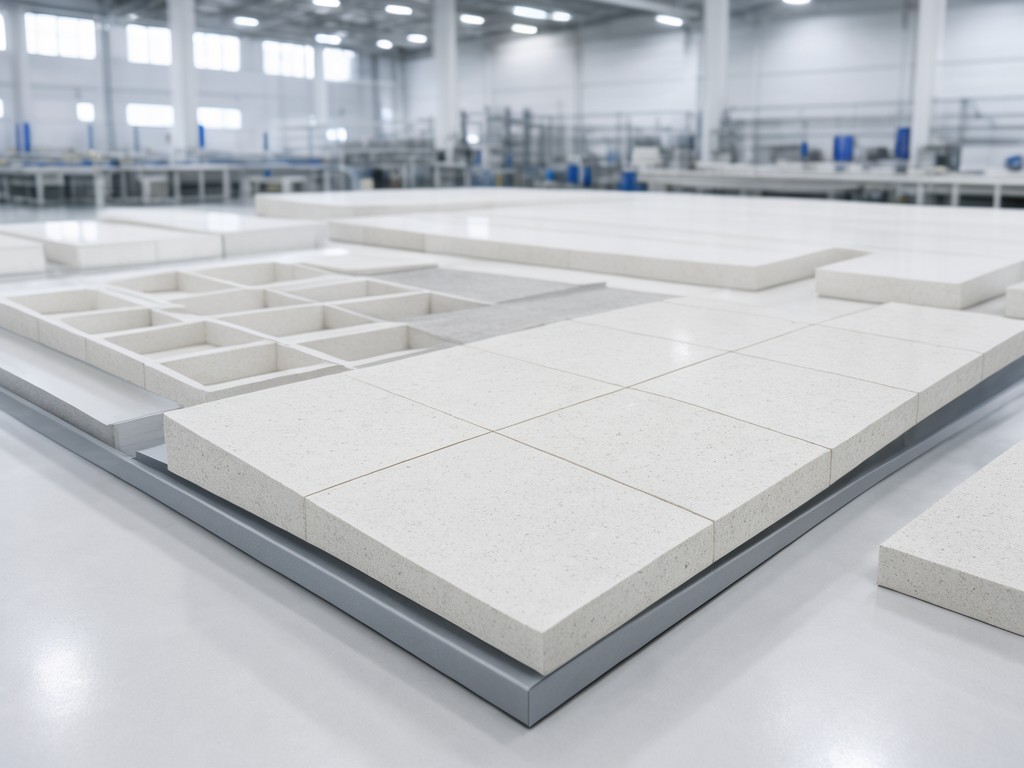
The manufacturing line begins with precision-milled steel molds to ensure dimensional tolerances within a +/- 0.5mm range. The mixture is vibrated under vacuum to eliminate trapped air pockets, which are the primary source of structural failure and moisture-related ingress in sub-standard culture stone products.
| Parameter | Specification Range | Testing Method |
|---|---|---|
| Thickness Options | 8mm, 12mm, 20mm | Digital Caliper |
| Compressive Strength | 45 - 60 MPa | Static Load Test |
| Water Absorption | <0.05% | Weightimetric Method |
| UV Resistance | Rating 4-5+ | Accelerated Weathering |
Size and Weight Range
Bulk orders are typically palletized based on the square footage requirements of the project to minimize transit breakage. We provide custom-cut dimensions to reduce on-site waste, which often accounts for a significant percentage of cost in traditional cladding projects.
Usage Scenarios and Segments
Commercial developers select this material for modern retail developments where a uniform aesthetic is required across multiple repetitive architectural elements. For residential distributors, the focus shifts to the ease of installation, as the lightweight nature allows for faster labor cycles compared to heavy natural stone slabs.
Capacity and Tooling Scheduling
Lead times for custom molds are determined by the complexity of the geometry. Standard linear profiles are available for immediate production, whereas bespoke architectural textures require a 4-6 week tooling phase to ensure the surface finish matches the approved physical sample exactly.
Minimum order quantities (MOQ) are calculated based on batch volume to maintain the efficiency of the vacuum infusion process. Orders below the standard threshold incur a setup surcharge to account for the cleaning and calibration of the industrial molds.