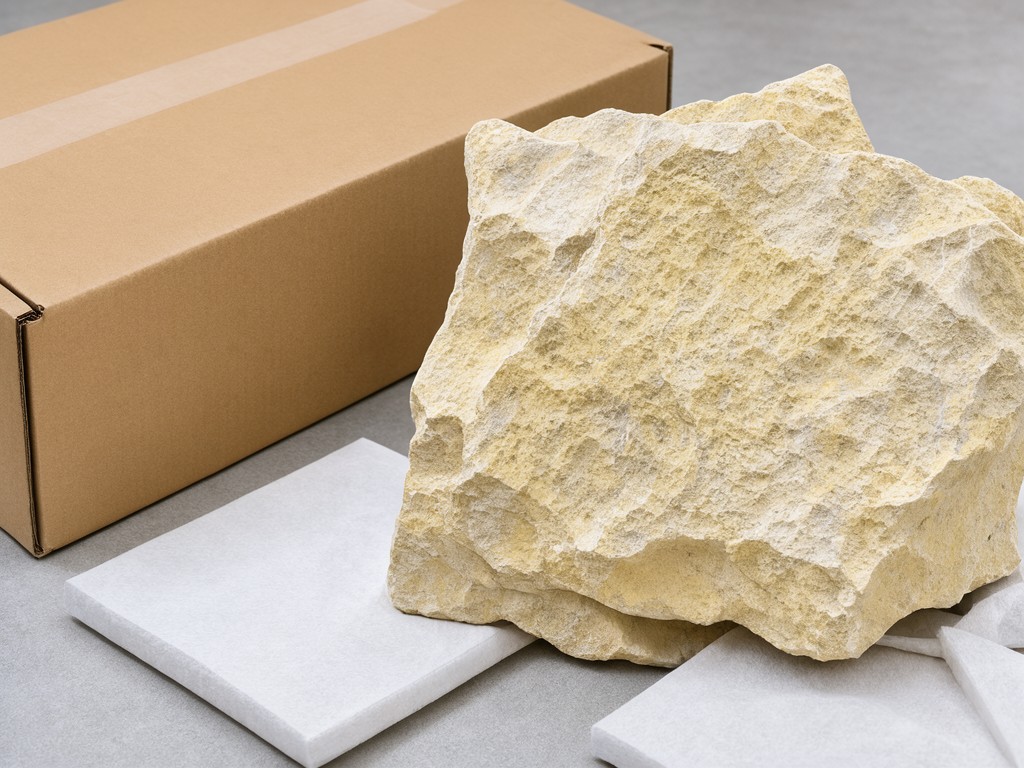
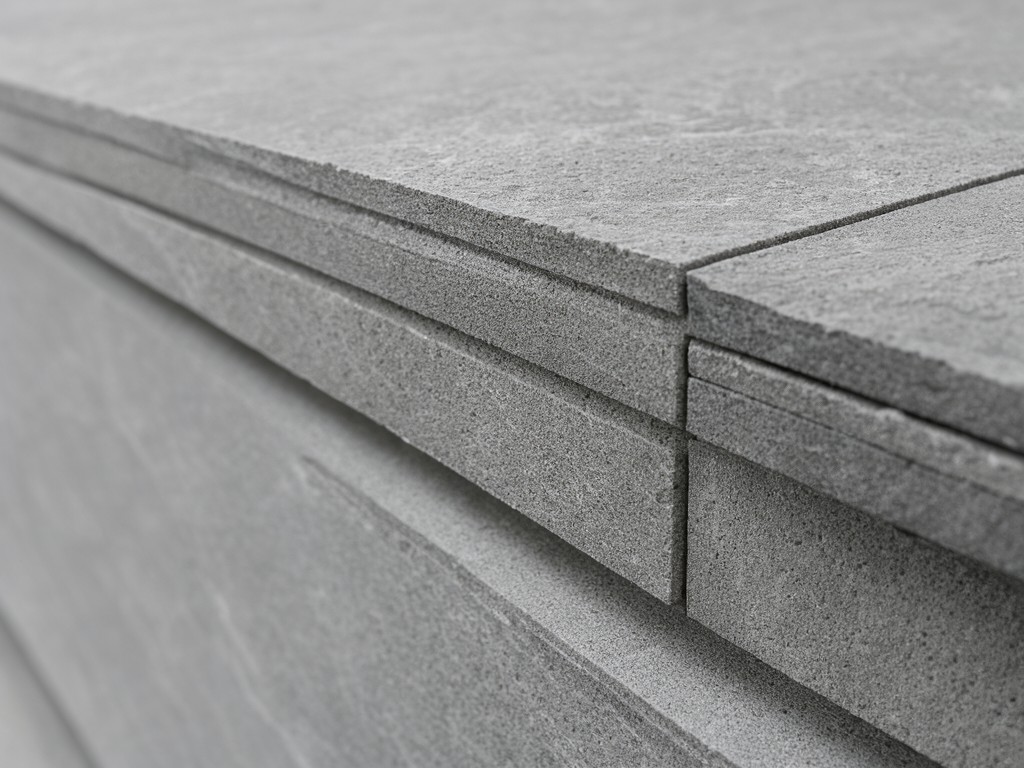
wholesale sandstone cladding material factory: What Buyers Should Check Before Ordering
Fatigue appears at the stress concentration where the stone substrate meets the mechanical anchors. In large-scale architectural cladding projects, a variance of even 2mm in thickness across a single lot leads to uneven adhesive distribution and subsequent mechanical failure during the curing phase.
Procurement officers often prioritize the aesthetic hue of the sandstone while the porosity and water absorption rate determine the long-term structural integrity of the facade. If the absorption rate exceeds 5% by weight, frost-thaw cycles will cause spalling at the surface layer within the first seasonal transition.
Critical Specification Rule: Always verify the modulus of elasticity. High-stiffness sandstone is more prone to brittle fractures under the thermal expansion of the underlying steel frame, leading to micro-cracking in high-rise curtain walls.
The Problem Buyers Keep Paying For
The hidden cost of wholesale cladding lies in lot-to-lot drift. When a distributor orders a second shipment for a multi-phase development, any shift in the mineral composition or grain density results in a visible color mismatch. This inconsistency forces expensive on-site trimming or the rejection of entire sections, eroding profit margins.
Standardized testing often fails to account for dimensional tolerances in bulk production. If the factory machines are not calibrated to a +/- 0.5mm tolerance, the labor cost on-site installation increases by 30% as installers manually adjust each panel to ensure flush joints.
Material Options and Their Trade-offs
| Material Type | Performance Profile | Primary Trade-off |
|---|---|---|
| Honed Sandstone | High surface abrasion resistance; low porosity | Higher unit cost; requires precision load-bearing calculations |
| Split-Face Natural | Natural texture depth; high mechanical grip | Vulnerable to moisture-induced staining if not sealed |
| Thinned Veneer | Reduced dead load; rapid installation speed | Limited impact resistance; requires specific mechanical fixing systems |
Specification Range and Customisation Limits
Weight and stiffness trade off against each other in structural cladding. A thicker slab increases the thermal mass of the building but significantly raises the risk of shear failure under extreme wind-load pressures.
- Thickness Tolerance: Ranges from 12mm for lightweight veneers to 50mm for load-bearing structural-style panels.
- Surface Finish: Available in honed, flamed, sandblasted, or tumbled finishes. Note: Sandblasted finishes increase surface area, potentially increasing sealant consumption.
- Edge Profile: Square-cut for minimal joints, or chamfered for exposed corners. Custom-grooved edges are available for specific non-slip requirements.
- Color Batch Consistency: Wholesale orders are categorized by quarry block. We guarantee a Delta-E variance limit for high-volume orders to ensure architectural uniformity.
Assumptions Buyers Should Stop Making
The limiting factor is rarely the headline specification; it is the chemical compatibility between the stone and the adhesive. Many buyers assume all sandstone is inert, but high calcium content in certain varieties can react with cement-based mortars, leading to efflorescence and structural weakening.
Another common misconception is that "durable" implies zero-maintenance. In coastal environments, salt-crystallization within the pores of fine-grain sandstone will eventually erode the surface unless a breathable-grade hydrophobic repellent is applied annually.
What Can Be Customised and What Cannot
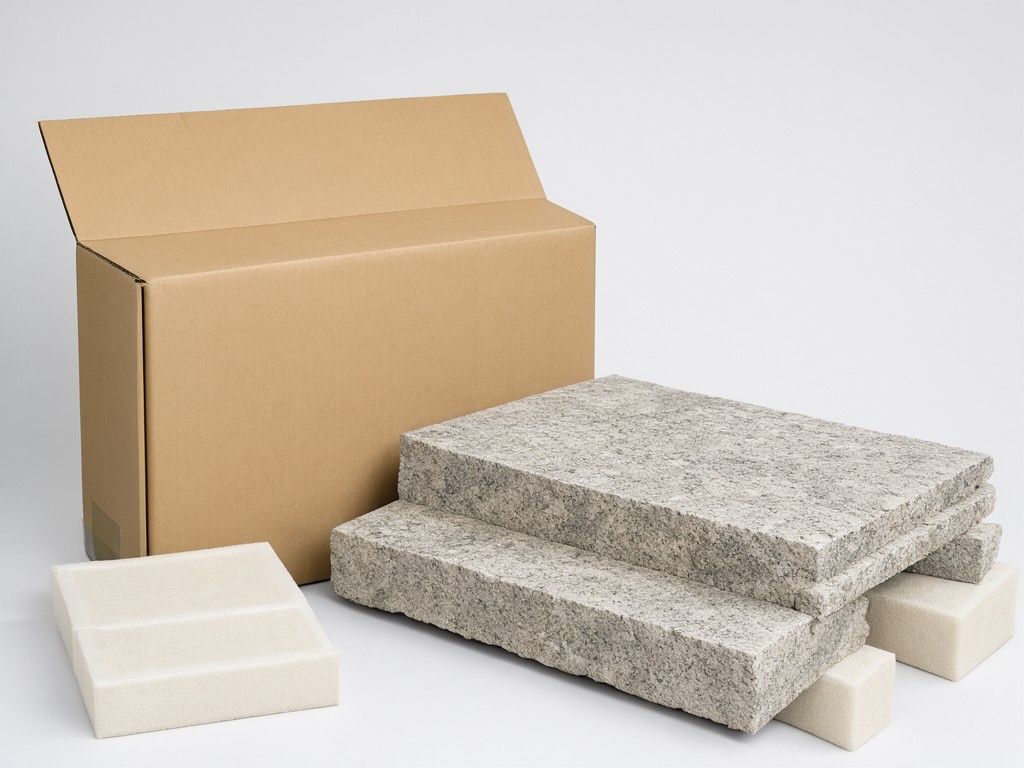
Customization is focused on the physical dimensions and surface treatments. However, the natural mineralogical composition of the sandstone itself cannot be altered without compromising the material's fundamental properties.
Customizable Elements
- Precision panel dimensions (mm)
- CNC-cut mechanical bolt holes
- Specific sealant-impregnants
- Back-mesh reinforcement type
Fixed Constraints
- Quarry-specific color variations
- Natural compressive strength limits
- Base material porosity rates
- Natural veining patterns
Who Uses It and Where It Matters
Commercial developers require material that meets fire-rating standards for high-density urban zones. In these applications, the factory focuses on the stone's density and its resistance to delamination under high-heat events.
Distributors serving the luxury residential market prioritize the tactile quality of the honed finish. For these clients, the consistency of the surface scratch resistance is the primary metric used to evaluate between high-end architectural suppliers.
Volume Planning and Lead Time
| Order Volume | Standard Lead Time | Logistics Strategy |
|---|---|---|
| Sample Orders (< 10sqm) | 2-3 Weeks | Air freight from existing stock |
| Project Scale (100-500sqm) | 6-8 Weeks | Consolidated containerized shipping |
| Wholesale Bulk (>1000sqm) | 12-16 Weeks | Direct quarry-to-site logistics |
Request a technical specification review and wholesale quotation