Wholesale black quartz slate wall cladding supplier
Black quartz slate provides a high-density mineral solution for architectural envelopes where structural integrity and moisture resistance are mandatory. Unlike softer sedimentary stones, this material exhibits a low absorption rate, which prevents delamination in high-humidity environments. Procurement teams prioritize this cladding for its ability to maintain tonal consistency across large-scale commercial installations.
Design Constraints Behind the Specification
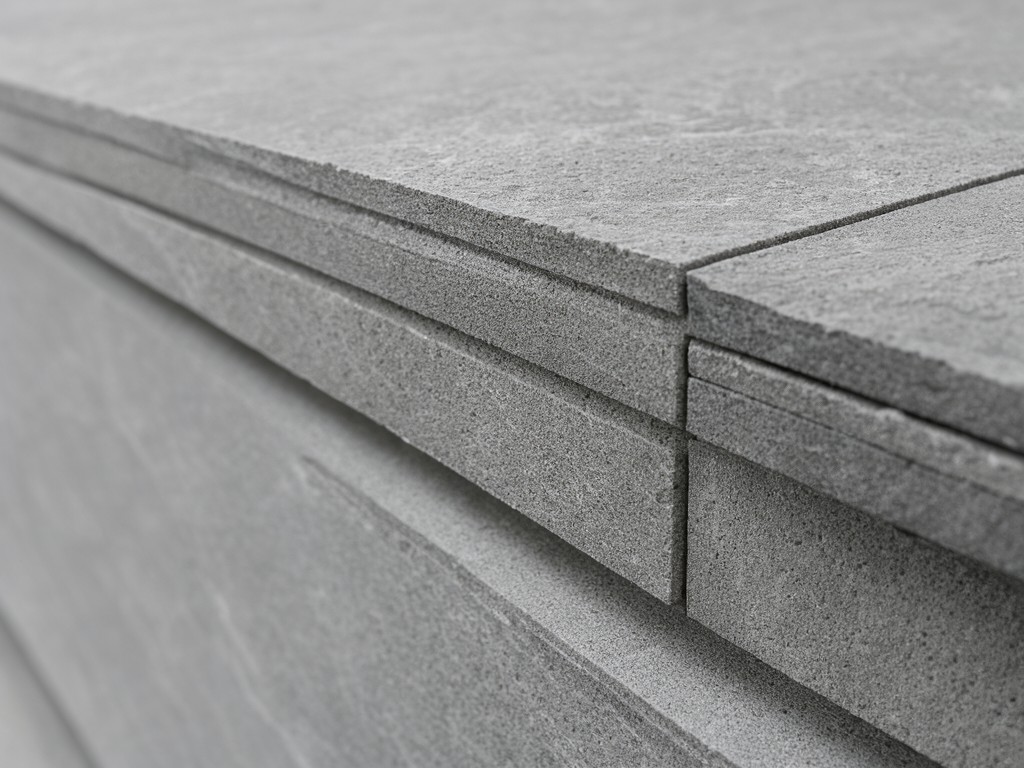
The performance of black quartz slate is dictated by the cleavage process and the surface finish. A natural split finish increases texture, whereas a honed finish reduces the surface area where organic matter can adhere, simplifying maintenance cycles. For wholesale-level distributors, maintaining strict dimensional tolerances is critical to ensure seamless grout lines during rapid-site installation.
Thermal expansion remains a factor in exterior applications where the substrate undergoes direct solar exposure. The quartz matrix has a low coefficient of thermal expansion compared to synthetic composites, but the adhesive system must be flexible enough to prevent stress-induced cracking during rapid temperature fluctuations.
| Parameter | Standard Range | Testing Metric |
|---|---|---|
| Water Absorption | < 0.5% | Porosity Rating |
| Stone Strength | 120-180 MPa | Compressive Load |
| Surface Hardness | 6-7 Mohs | Abrasion Resistance |
Measured Performance in Real Use
In urban environments exposed to atmospheric pollutants and acid rain, black slate resists chemical etching better than limestone. The mineral composition ensures that the black pigment does not fade under prolonged UV radiation exposure. This stability makes it a preferred choice for luxury hospitality exteriors where aesthetic longevity is a primary KPI.
Maintenance requirements are minimal because the stone is non-porous. Standard industrial-grade cleaners are often unnecessary for natural-split surfaces, as the density of the quartz slate provides a natural barrier against deep penetration of oils or water-based cleaning agents.
Buying Mistakes That Lead to Returns
Failure to account for substrate preparation is the leading cause of cladding failure. If the wall surface is not perfectly planar, the rigid slate slabs will experience uneven point-loading, leading to mechanical bond failure. Buyers must verify the flatness of the mounting structure before committing to large-format material orders.
Ignoring the batch-level variance can also result in visual inconsistencies. While quartz slate is a natural product, variations in veining patterns can occur. We recommend sourcing from a single block lot for projects requiring a uniform color profile across a single facade.
Who Uses It and Where It Matters
Architects utilize this material for high-end residential feature walls and commercial lobbies where a dark, modern aesthetic is required. Procurement officers select it specifically for its fire-rating properties, which often meet stringent safety standards for public building construction.
How Consistency Is Held Across Batches
Our quality control process involves moisture-level checks and dimensional verification on every pallet. Each shipment is inspected for structural fractures or hairline cracks that may occur during the mechanical cutting phase. This ensures that the wholesale buyer receives material ready for immediate installation without onsite wastage.
Stock Availability and Reorder Planning
Current inventory levels for standard sizes are maintained to support rapid project timelines. For custom-cut dimensions or specific finishes, a lead time of 4-6 weeks is typically required to account for extraction and precision-processing cycles.
Ordering, Tooling and Lead-Time
Wholesale orders are processed based on square meter requirements with reinforced timber packaging to prevent breakage. We provide technical data sheets for every batch to assist engineering teams during the design phase.