Factory Direct Exterior Stone Cladding Supplier for Wholesale Orders
Procurement for large-scale facade projects requires balancing dimensional stability against the thermal expansion coefficients of the stone substrate. When sourcing for high-volume architectural applications, the primary failure mode is rarely the material itself but rather the variance in thickness across a batch, which creates mechanical stress during mechanical installation. Low-grade batches often exhibit inconsistent moisture absorption rates, leading to localized spalling or surface delamination after 18 to 24 months of freeze-thaw cycles.
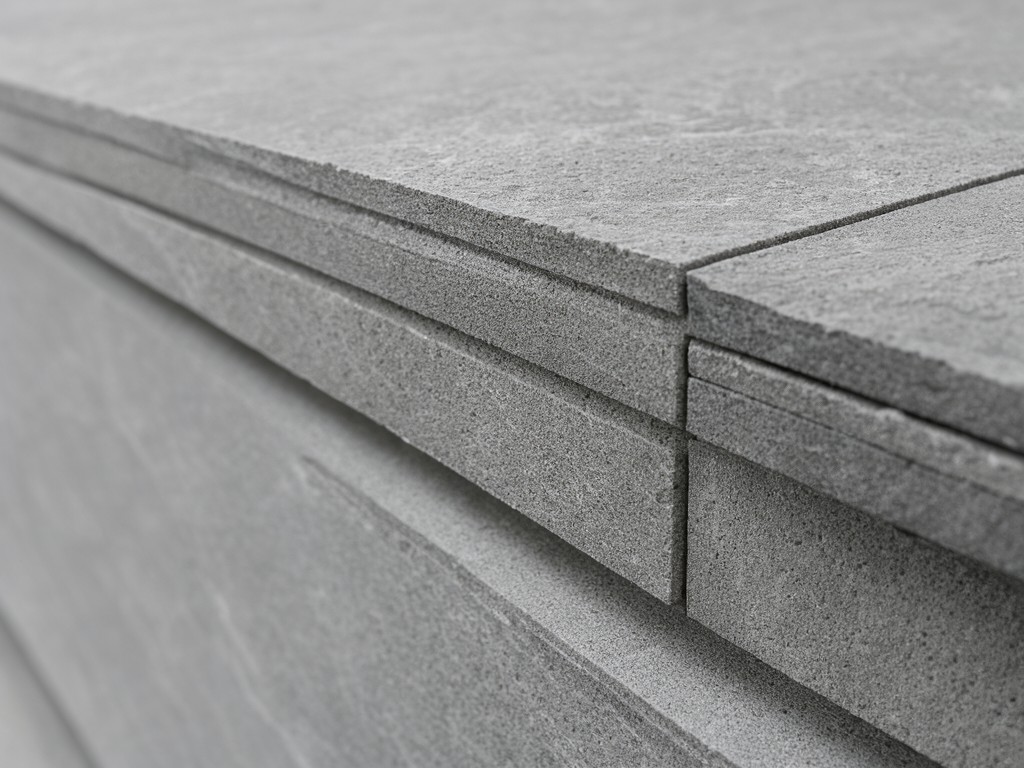
Consistency in mineral density is the metric that dictates long-term structural integrity. Our manufacturing process focuses on calibrated stone-cutting to ensure that every panel maintains a +/- 0.5mm thickness tolerance across the entire run. This precision prevents the "lippage" effect common in inferior-cut materials, which often causes uneven adhesive distribution and eventual shear failure of the bonding system.
Where Cheaper Alternatives Fall Short
Mass-market alternatives often prioritize aesthetic uniformity over the mechanical properties of the stone. This results in high porosity, where the stone acts as a sponge, leading to internal pressure buildup when water freezes. Our factory lines utilize a vacuum-compression process that reduces the effective water absorption rate below 0.2%, ensuring the cladding remains structurally sound in climates prone to rapid temperature fluctuations.
| Parameter | Standard Grade | Industrial-Grade |
|---|---|---|
| Thickness Tolerance | +/- 2.0mm | +/- 0.5mm |
| Water Absorption | > 1.5% | < 0.2% |
| Compressive Strength | 40-60 MPa | 80+ MPa |
How It Performs in Use
Surface performance in exterior environments is dictated by the resistance to chemical weathering and UV degradation. In urban environments, untreated stone can react with acidic rain, leading to surface pitting and loss of the natural finish. We offer a penetrative silane sealer option that reinforces the pore structure without creating a vapor film, allowing moisture vapor to escape while preventing the ingress of liquid water and atmospheric pollutants.
Mechanical-Honed Finish
Ideal for high-traffic pedestrian zones where slip resistance is critical. The process increases the surface area slightly for friction while maintaining the structural integrity of the stone face.
Polished/Split Face
Best for architectural accents where visual impact is the priority. Requires regular maintenance to prevent mineral staining from water runoff in shaded areas.
How It Is Built and What Changes
The fabrication workflow begins with raw block selection based on grain density and natural fault lines. We reject blocks with visible inclusions that could compromise shear strength. Once fractured, the slabs are processed using CNC wire saws to ensure the geometry of the cladding panels is perfectly square, which is essential for dry-fix systems where the margin for onsite adjustment is minimal.
- Precision CNC cutting for complex geometric patterns and interlocking tongue-and-groove.
- Laser-guided edge profiling to ensure perpendicularity for corner installations.
- Batch-level traceability tagging to ensure color matching across multiple project phases.
- Stress-relief annealing cycles to prevent warping in large-format slabs.
Specification Range and Customisation Limits
Custom orders require a detailed technical drawing that specifies the load-bearing requirements of the mounting system. We accommodate bespoke dimensions up to 3000mm x 1500mm, provided the stone thickness is sufficient to prevent snapping under its own weight. For large-format panels, we recommend glass-fiber mesh backing to increase tensile strength during transport and handling.
Matching the Product to Buyer's Need
Lead times vary based on the specific quarry availability and the complexity of the finish. For standard inventory runs, we maintain a rolling stock to facilitate rapid reorder cycles. Custom-machined orders typically require an 8-to-12 week window to account for the material approval phase and the precision-cutting production schedule.