Specifying Ledger Stone Corners Manufacturer for Wholesale and OEM
Consistency in structural support components determines the final integrity of the entire masonry or framework assembly. When sourcing ledger corners in bulk, the deviation of 0.5mm in angularity can lead to misalignment during high-speed installation phases. Our manufacturing process focuses on maintaining tight dimensional tolerances to ensure that every unit fits the geometric requirements of the primary architectural plan.
| Parameter | Standard Range | Custom Options |
|---|---|---|
| Material Composition | Reinforced Polymer / Galvanized Steel | Carbon-fiber reinforced grade |
| Angular Tolerance | ±0.2 degrees | ±0.05 degrees |
| Load Bearing Capacity | 15kg - 50kg unit | Bespoke testing |
What Actually Determines Performance
Material fatigue in ledger corners usually originates at the stress point where the corner meets the mounting bracket. If the injection molding process does not provide sufficient internal radius, the component will crack under cyclic loading. We utilize a pressure-molding technique to ensure the density is uniform, which reduces the risk of internal voids that cause delamination.
Environmental resistance is a trade-off with surface-level finish. Industrial-grade coatings provide UV protection but can chip if the substrate undergoes rapid thermal expansion and contraction. For outdoor projects, we specify a powder-coated finish that maintains its bond without fading after 2,000 hours of direct exposure.
Standard Grade
Designed for interior applications where moisture exposure is not the primary driver. Focuses on cost-per-unit optimization while maintaining structural rigidity.
Premium Grade
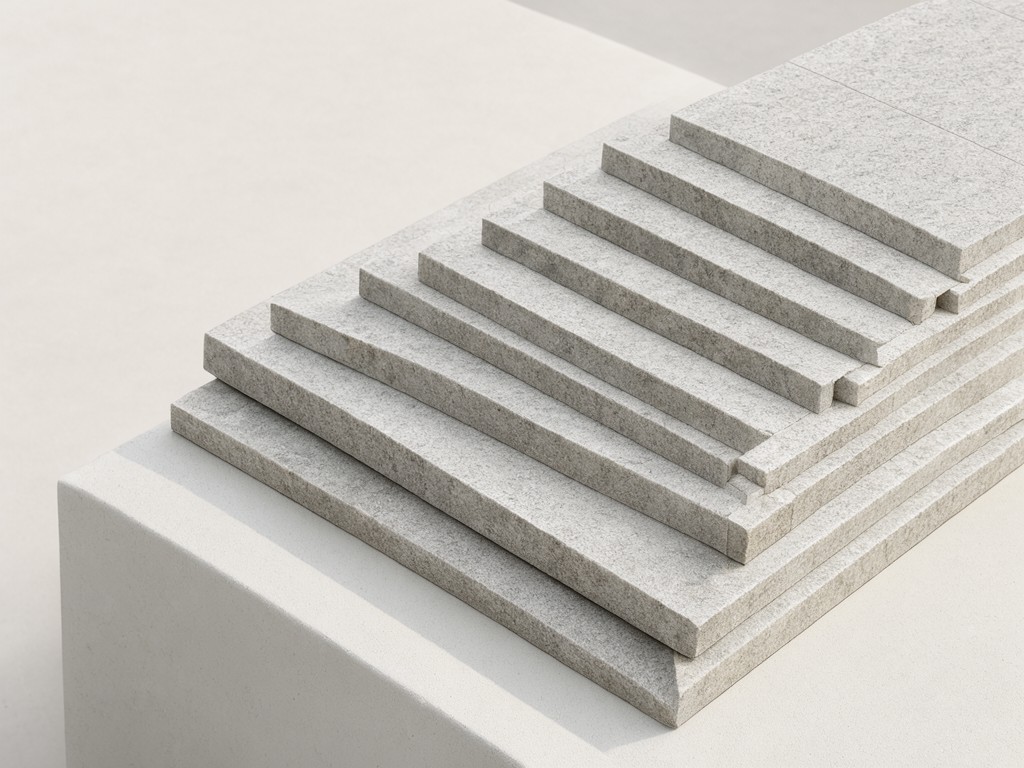
Engineered for external facades and high-traffic environments. Includes UV stabilizers and chemical-resistant polymers to prevent degradation.
Comparing Two Configurations
Procurement officers often choose between single-piece cast and multi-part assemblies. Single-piece corners eliminate the risk of fastener failure but increase the tooling cost for small batch runs. Multi-part assemblies allow for easier shipping but require rigorous torque checks on the joints to prevent loosening over time.
- Single-piece units reduce assembly time by 15% on the job site.
- Multi-part designs allow for material-specific reinforcement in high stress zones.
- Cast units typically offer a 20% higher fatigue life in vibration-heavy environments.
What Can Be Customised and What Cannot
Customization is primarily limited to dimensional geometry and surface-level finishes. We can adjust the wall thickness in 0.5mm increments to meet specific stone cladding thicknesses. However, the core structural geometry of the corner remains fixed, as altering the primary angle would compromise the structural load rating of the entire line.
Chemical resistance can be adjusted via the polymer blend. If the installation site is exposed to salt-air or acidic rain, we switch to a base resin that resists oxidative corrosion. This change affects the lead time due to the specific material sourcing requirements.
Usage Scenarios and Buyer Segments
Large-scale residential developments require high volumes with absolute consistency across thousands of square meters. In these cases, we provide batch traceability to ensure that corners manufactured in the first month of the project match those in the last, preventing visual discrepancies in the stone facade.
Commercial retail-facing projects prioritize aesthetic durability and impact-resistance. Here, the focus shifts to the abrasion resistance of the coating, ensuring the corners do not scuff during the installation process or subsequent maintenance.
Capacity, Tooling and Scheduling
Standard production cycles for existing molds are typically 21 days once the deposit is confirmed. For custom geometries, the tooling phase adds 4 to 6 weeks for CNC-mold fabrication. Once the sample is approved, we can scale output up to 50,000 units per month to meet aggressive project timelines.
Ordering, Tooling and Time Questions
What is the minimum order for custom-molded corners?
Custom tooling requires a minimum of 2,000 units to offset the initial mold-making costs.
Can you provide physical samples before mass production?
Yes, we provide 3D-printed prototypes for dimensional verification followed by injection molded samples for material testing.
How are the corners protected during international shipping?
Units are palletized with reinforced corner protectors and moisture barriers to prevent impact damage or corrosion during sea transit.