Specifying Natural Culture Stone Supplier for Wholesale and OEM Orders
Structural integrity depends on the density of the stone substrate and the precision of the mechanical bonding agent. While thin-cut natural veneers offer lower dead loads for facades, the risk of delamination under thermal expansion cycles increases if the adhesive interface is not calibrated for the stone's absorption rate.
Sourcing natural culture stone requires a balance between aesthetic variance and the mechanical consistency of the stone face. Large-scale architectural projects often face issues when color density shifts too significantly between production batches, leading to visible visual breaks across large surface areas. Procurement officers must prioritize suppliers that maintain tight control over water absorption coefficients, as high-porosity stone faces are prone to premature spalling when exposed to rapid freeze-thaw cycles.
Material Options and Trade-offs
The choice between quartzite, sandstone, and slate dictates the maintenance cycle and resistance to chemical weathering. Limestone-based culture stones provide high textural detail but remain susceptible to acid rain erosion in urban environments if the surface is not properly sealed. Slate offers superior water resistance but is prone to higher breakage rates during mechanical handling, necessitating reinforced transit packaging to maintain yield percentages.
| Material Type | Primary Resistance | Failure Mode |
|---|---|---|
| Quartzite Veneer | Abrasion and Scratch | Brittle fracture on impact |
| Natural Sandstone | Compressive Strength | Surface spalling/efflorescence |
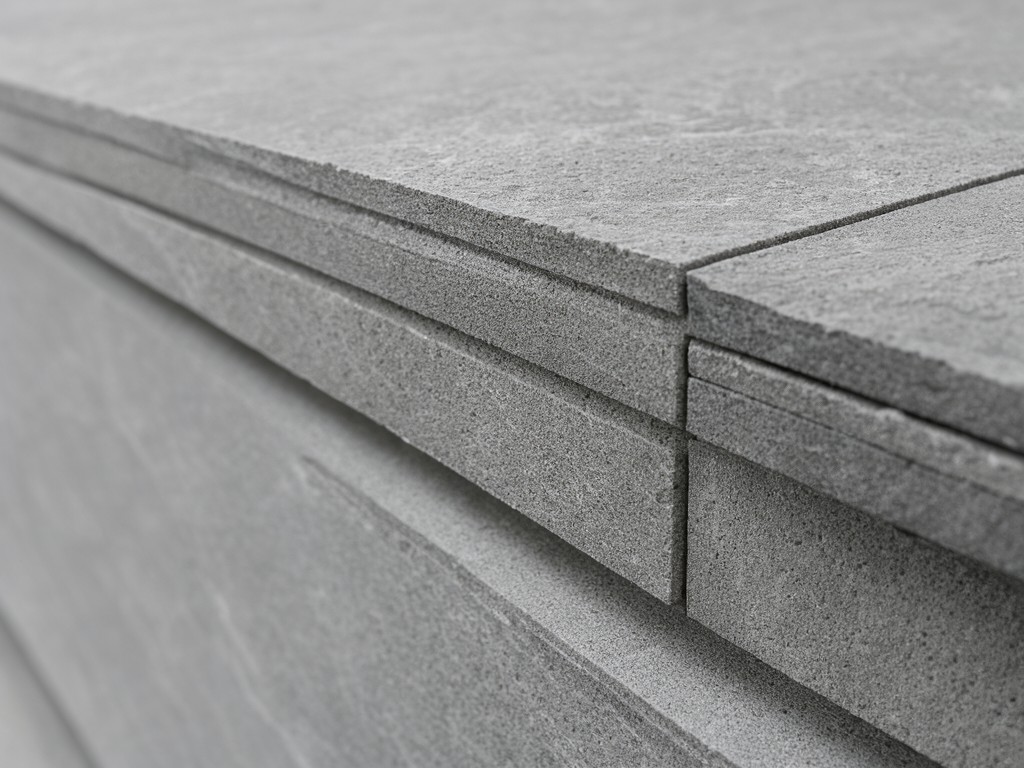
| Layered Slate | Moisture Barrier | Delamination of layers |
Measured Performance in Real Use
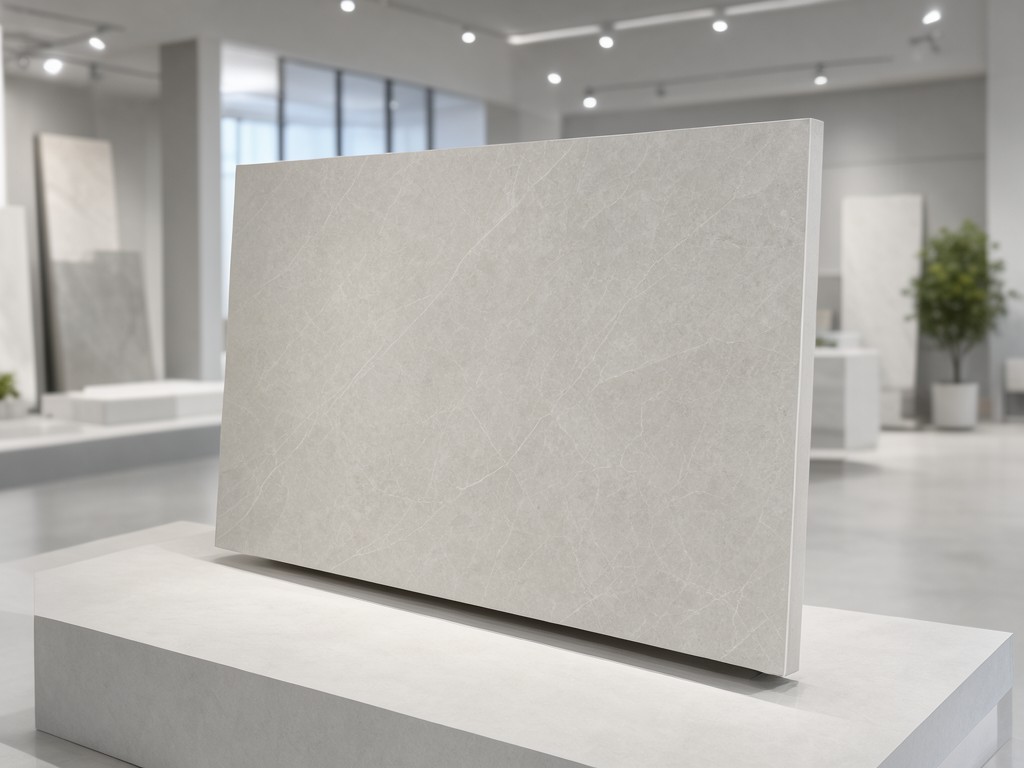
Performance in the field is judged by the bond-to-thickness ratio. A 30mm natural culture stone with a 5mm reinforced backing typically provides the necessary stability for vertical cladding without the weight of full-bed thin-set mortars. If the stone thickness varies by more than ±3mm, the mechanical key is compromised, and the installation relies entirely on the chemical bond of the mortar to prevent shear failure under gravity loads.
Thermal Expansion Variance
Thermal expansion coefficients must be matched between the stone face and the substrate. In high-temperature environments, a mismatch in the expansion rate between the natural stone and the concrete substrate leads to cracking at the edges of the veneer panels. We test for dimensional stability to ensure that the stone remains within the allowable tolerance of standard architectural adhesive systems.
Segment-Specific Requirements
Residential development requires a high degree of color-matching to ensure a uniform aesthetic across multiple units. Conversely, commercial-scale projects prioritize fire-rating certifications and rapid-install features like flat-shape consistency to speed up the installation timeline. Bulk buyers must specify the required face-texture—whether rough-hewn for historical accuracy or split-face for modern minimalist architectural profiles.
Inspection Items and Test Methods
- Water absorption testing to determine the capillary suction and frost-resistance rating.
- Flexural strength testing to verify the load-bearing capacity of reinforced backing.
- Dimensional tolerance checks to ensure uniform thickness across palletized units.
- Color spectrophotometry analysis to maintain batch-to-batch consistency across runs.
Stock Availability and Reorder Planning
Supply chain volatility in natural stone is driven by seasonal quarry output and international logistics constraints. Large-scale orders require lead times that account for custom packaging, including heat-treated timber pallets and shrink-wrap reinforcement to prevent moisture damage during transit. Reorder points are calculated based on projected consumption rates to avoid site shortages during the mid-phase construction window.
Export Packaging and Handling
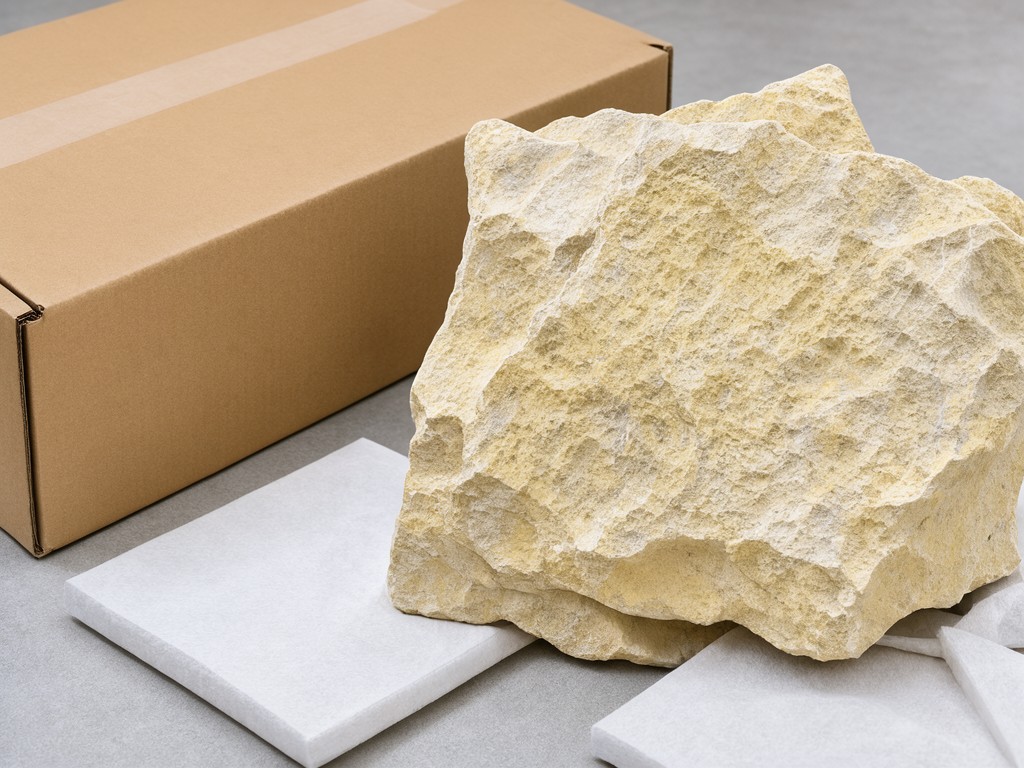
International shipping demands heavy-duty transit crates that prevent edge-chipping and breakage. Each pallet is secured with internal bracing to prevent the shifting of the stone slabs during sea-ight oscillations. We utilize moisture-barrier wraps to ensure that the natural stone does not absorb salt-air contaminants during long-duration maritime transport.
Request technical data sheets or sample packs for your next large-scale project.
Contact our Technical Sales Team