wholesale outdoor patio pavers supplier: What Buyers Should Check Before Ordering
Selecting natural stone for large-scale hardscaping requires balancing aesthetic variance with mechanical structural integrity. Sandstone, due to its high porosity and sedimentary nature, often suffers from spalling or rapid erosion if the density is not verified for specific environmental loads. For procurement managers, the primary risk is not the visual appeal, but the consistency of the material under repeated freeze-thaw cycles and heavy pedestrian traffic.
Technical Note: Always verify water absorption rates. Sandstone exceeding 5-8% absorption significantly increases the risk of salt crystallization and surface delamination in colder climates.
What the Design Has to Balance
| Feature | Design Trade-off |
|---|---|
| Surface Texture | High-grip finishes increase slip resistance but trap organic matter and moss. |
| Thickness Variance | Thicker slabs offer load resistance but increase freight costs and labor during installation. |
| Color Uniformity | Natural variation provides organic aesthetics but complicates batch matching for large commercial orders. |
How It Is Built and What That Changes
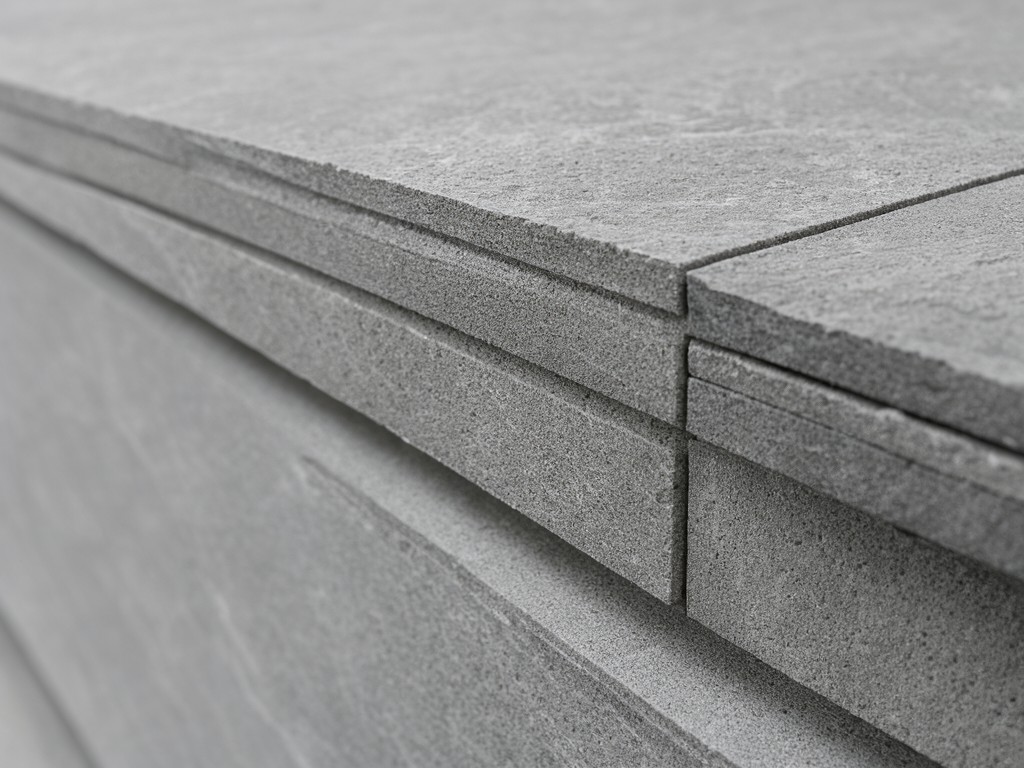
The manufacturing method dictates the service life of the paver surface. Saw-cut sandstone provides clean, linear edges suitable for modern architectural projects but leaves the pores exposed to direct-impact abrasion. In contrast, flamed or brush-hammered processes break the natural surface layer, creating a more resilient texture profile that hides wear and manages water runoff more effectively.
Structural stability depends on the bedding plane orientation during the quarry process. If the stone is cut with the bedding planes parallel to the surface, the pavers are prone to delamination under point loads. High-grade suppliers utilize cross-cut sections to ensure the internal grain structure resists shearing across the entire thickness of the slab.
Size, Weight and Specification Range
- Standard paver thickness typically ranges from 20mm to 50mm depending on traffic density.
- Weight density fluctuates between 22kg and 28kg per square meter per thickness.
- Compressive strength usually falls between 30MPa and 60MPa for high-density sandstone variants.
Comparing Two Standard Configurations
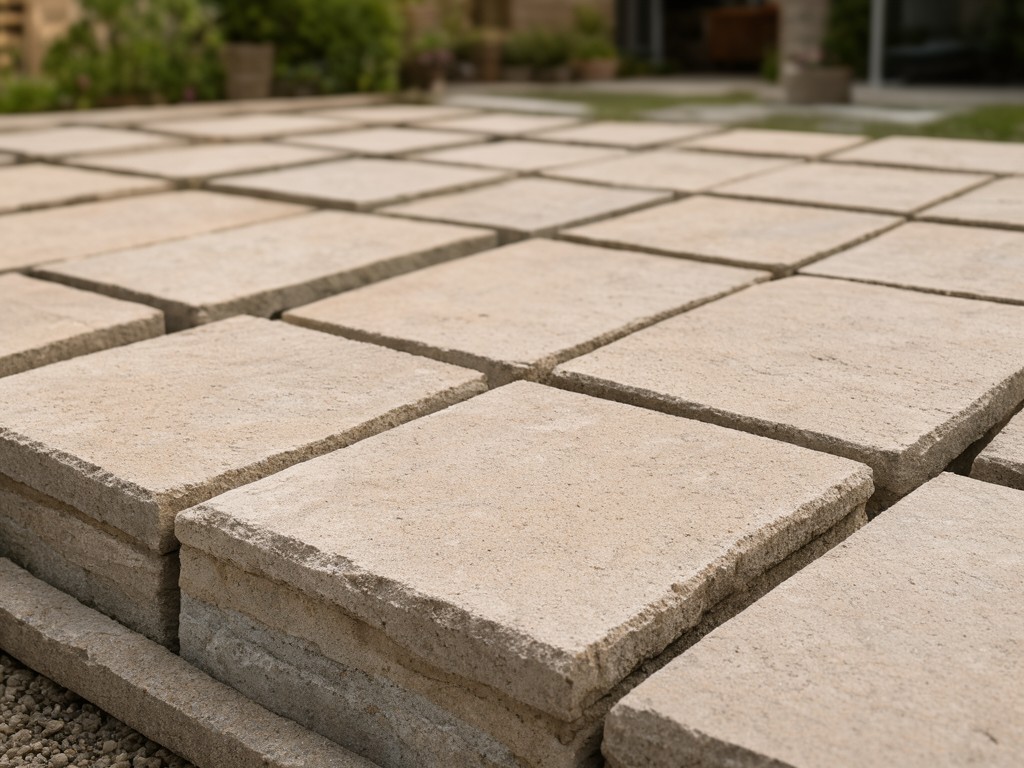
Irregular Paving
Best for organic landscapes where joint widths are variable. Requires higher labor costs due to custom fitting and waste rates often reaching 15%.
Rectangular Poned
Precision-cut dimensions for commercial plazas. Offers predictable layout and faster installation but requires a perfectly leveled base to prevent shifting.
How to Choose Before Requesting a Quote
Before initiating procurement, define the specific environmental exposure. A project in a salt-air environment requires a different mineral density to prevent salt-induced pitting compared to an inland garden-path application. Request samples with technical data sheets for the specific quarry face; this allows you to conduct your own porosity tests before committing to a full container load.
To ensure the material batch aligns with your project timeline, review our technical tooling capabilities and material availability here.
Assumptions Buyers Should Stop Making
Assuming all sandstone is equal leads to site-wide failure. Variations in silica content between different quarries affect how the stone reacts to chemical sealants. Furthermore, do not assume that "natural" implies no need for protection; without a penetrating sealer, sandstone will stain permanently from oils and organic tannins within the first season of use.
Packing, Marking and Freight Configuration
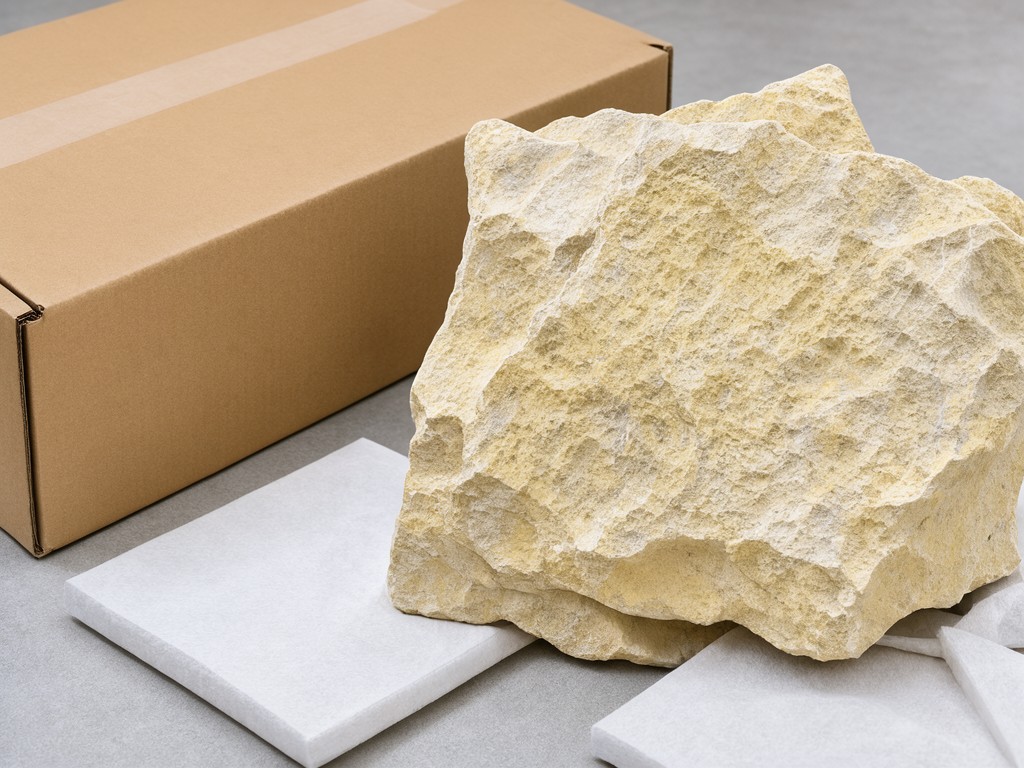
Heavy-duty stone requires specialized palletization to prevent edge fractures. We utilize heat-treated timber pallets with reinforced strapping to minimize lateral shifting during transit. Each pallet should be marked with the batch number, quarry origin, and total weight to ensure full traceability and accurate crane equipment planning at the construction site.
Ordering, Tooling and Lead-Time Questions
Lead times for natural stone are dictated by quarry extraction cycles rather than factory throughput. Custom-cut dimensions may add 4-6 weeks to standard lead times due to precision requirements. For standard stock items, availability is usually high, but color-matching across different orders cannot be guaranteed without specific production runs.
Frequently Asked Questions
What is the minimum order quantity for custom sizes?
Typically, we require a minimum of 20 square meters to offset the cost of specialized blade setup and machine calibration.
Can these pavers be used for pool decks?
Only if the sandstone is selected with a low water absorption rate and a high-slip-coefficient finish to ensure safety when wet.
How is breakage handled during international shipping?
Our standard protocol includes a 2-3% breakage allowance for natural stone; claims beyond this require documented photographic evidence immediately upon unloading.
Contact our technical team for a wholesale specification review