Wholesale Natural Slate Pavers Supplier: Specification and Supply Guide
Sourcing natural slate at scale requires an understanding of stone density and cleavage consistency to prevent breakage during installation. While decorative stone focuses on aesthetic variety, wholesale-grade slate is judged by its resistance to delamination and its thermal expansion coefficient. We provide material based on mineral composition and water absorption rates, ensuring the structural integrity remains intact through freeze-thaw cycles common in high-traffic commercial environments.
What This Is and Where It Fits
The primary metric for natural slate is the water absorption percentage, which dictates the stone's vulnerability to frost damage. Low-absorption variants (typically below 0.5%) are mandatory for exterior paving where moisture ingress leads to scaling. In large-scale projects, buyers must prioritize stone with high compressive strength to ensure the surface does not flake or shear under repeated exposure to cleaning agents or environmental salts.
| Parameter | Standard Range | Industrial Grade |
|---|---|---|
| Water Absorption | 0.1% - 0.8% | lt; 0.5% |
| Compressive Strength | 60 - 100 MPa | gt; 80 MPa |
| Density | 2,600 - 2,800 kg/m³ | Consistent ± 5% |
Customisation Options and Limits
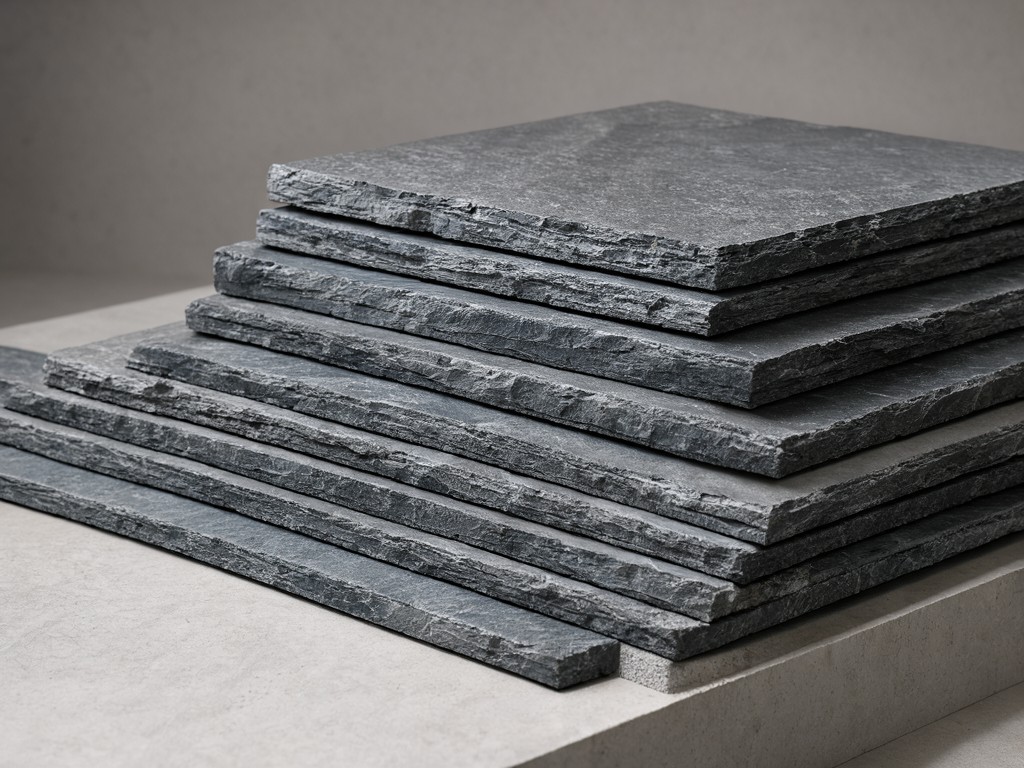
Surface finish directly impacts the coefficient of friction (slip resistance) and maintenance requirements. A natural-riven surface provides the highest traction for wet outdoor areas but increases the surface area where dirt and algae can accumulate. Conversely, honed or polished finishes offer a uniform profile but suffer significantly in slip ratings when exposed to moisture. Procurement officers must balance the desired visual uniformity of a honed finish against the specific safety requirements of the installation site.
Natural Riven Finish
Textured surface via natural splitting. Best for slip resistance in public plazas. High maintenance due to uneven texture.
Honed / Matte Finish
Smooth, ground surface. Ideal for interior luxury flooring. Requires regular sealing to prevent deep staining.
Working as a Production Partner, Not a Catalogue
Batch traceability is the most overlooked factor in bulk stone procurement. Because slate is a geological product, color variance between different quarries or even different strata layers can be significant. We manage this through strict-lot allocation, ensuring that a single project order receives stone from a specific lithological tone range. This prevents the common "patchwork" effect seen when mid-project shipments arrive with different mineral concentrations or oxidation levels.
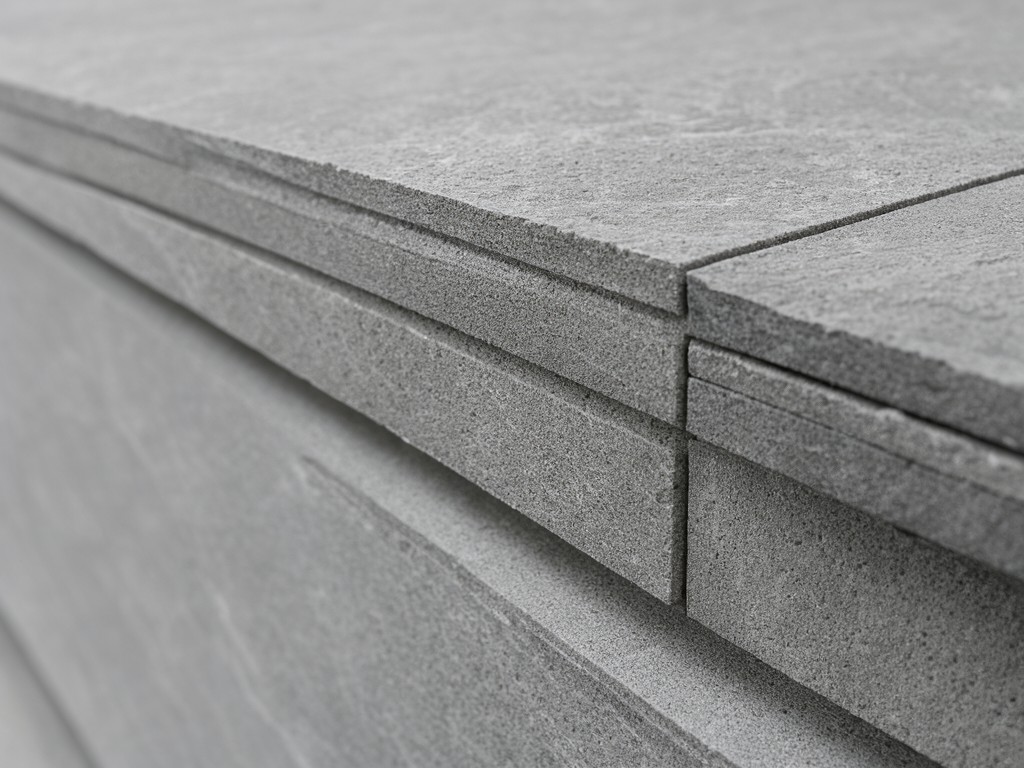
Quality control also extends to dimensional tolerances. Hand-cut slate often results in thickness variations of ±3mm, which complicates the bedding process. Our mechanical-edge processing options reduce this variance to ±1mm, ensuring a level surface plane and reducing the amount of mortar required to compensate for irregularities.
How Consistency Is Held Across Batches
Freight protection is the primary point of failure for wholesale shipments. Slate is prone to edge fractures during impact if the palletization is not reinforced. We utilize bespoke heat-treated timber crates with internal tension strapping to prevent lateral shifting during transit. Without these structural supports, the breakage rate on thin-format slabs can exceed 15%, significantly impacting the landed cost per square meter for the end user.
Stock Availability and Planning
Inventory levels fluctuate based on the seasonal extraction cycles of the quarries. We maintain a rolling stock of high-demand dimensions to mitigate lead times for large-scale commercial developments. For custom sizes or specific thickness profiles, a 8-12 week lead time is standard to account for extraction, primary, and curing phases.
Export Packaging and Handling
International-grade packaging requires moisture-resistant wrapping to prevent salt efflorescence during long-duration sea transit. Each pallet is marked with weight, origin, and batch ID to facilitate rapid customs clearance and site-mapping.
Ordering, Tooling and Time Questions
Yes, provided the water absorption rate is low and the stone is properly sealed. Thermal shock must be managed to prevent expansion-induced cracking.
We recommend a minimum of 50 square meters to ensure cost-effective shipping and to allow for pallet-standardized units.
Natural slate is generally resistant to most acids, but penetrating sealants are recommended to protect the pore structure from acidic organic stains.