Low Price Flamed Granite Outdoor Paving Tiles Factory
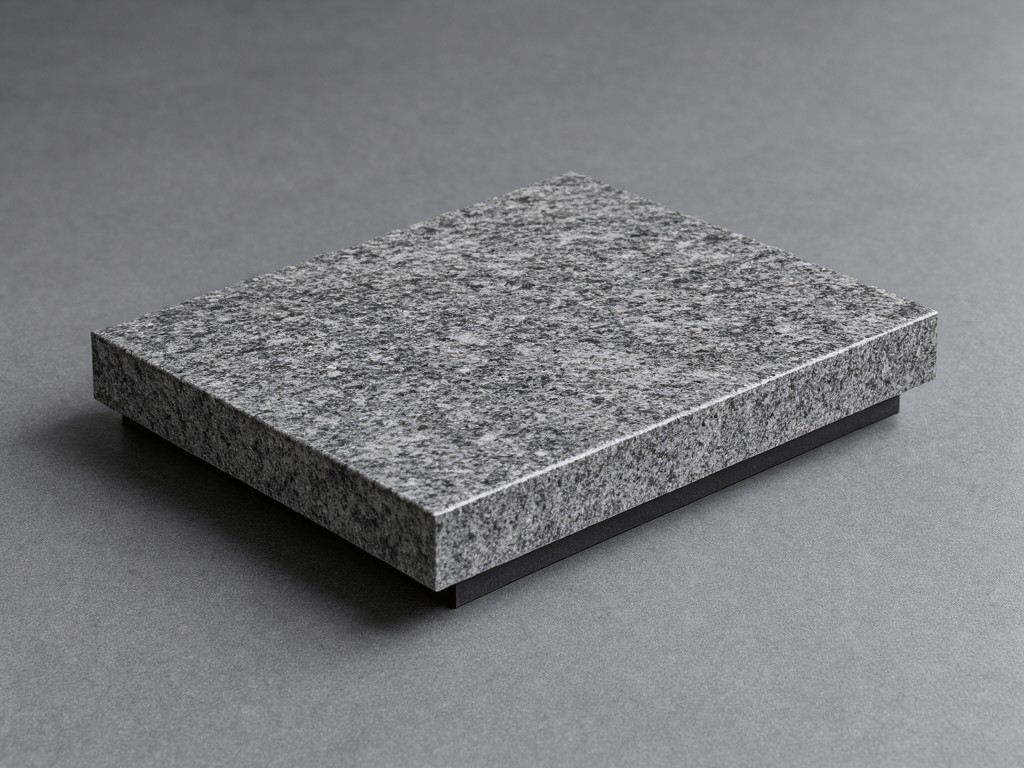
Procuring large-scale infrastructure materials requires a balance between material density and surface friction-resistance coefficients. Flamed granite utilizes a high-temperature thermal treatment to fracture the stone surface, creating a micro-textured topography that increases the slip resistance. This process is essential for high-traffic pedestrian zones where polished finishes would present a safety risk under moisture or oil exposure.
Cost-efficiency in granite production often stems from the source quarry depth and the precision of the flame-application. Lower-priced batches may exhibit higher variance in mineral density, which can lead to uneven wear patterns over thermal cycles. To ensure the batch meets load-bearing requirements for commercial plazas, the factory monitors the compressive strength and dimensional tolerance across the entire production run.
Technical Note: Surface Texture Integrity
The flamed texture depth typically ranges between 1.5mm to 3mm. Excessive heat application can cause internal micro-fracturing (spalling), reducing the effective service life of the tile under frost-thaw cycles.
Specification and Dimensional Parameters
| Parameter | Standard Range | Tolerance Metric |
|---|---|---|
| Thickness | 20mm - 60mm | ± 1.5mm |
| Water Absorption | < 0.5% | Batch Average |
| Compressive Strength | 150 - 250 MPa | ASTM C995 |
| Surface Friction Rating | R11 - R13 | COF Testing |
Design Constraints Behind the Specification
Selection of the granite grade depends on the specific mechanical load and environmental exposure. For residential walkways, a 20mm thickness is sufficient to manage pedestrian loads without triggering substrate failure. However, for vehicle-accessible curbsides, 50mm or 60mm slabs are mandatory to prevent structural cracking under point-pressure.
Granite composition—specifically the quartz to feldspar ratio—dictates the resistance to abrasion. High-quartz varieties maintain the flamed texture longer under heavy-duty foot traffic, whereas softer-grade stones may lose the "peaks" of the texture, smoothing the surface over a 3-to-5-year cycle.
Option Comparison by Usage
Standard Grade
Best for budget-sensitive garden landscaping and residential patios. Features natural color variation and moderate mineral density.
- Lower cost per sqm
- Medium abrasion resistance
- Standard flamed finish
Premium Grade
Engineed for commercial plazas and high-traffic urban environments. Enhanced density and uniform flamed finish.
- High load-bearing capacity
- Low porosity rate
- Enhanced frost resistance
What Checked Before Shipment
Quality control protocols focus on dimensional consistency to ensure tight joints during installation. We utilize laser gauges to verify that tiles remain within the ±1.5mm tolerance; deviation here causes lippage which creates tripping hazards and unsightly grout lines.
Visual inspection is performed to detect spalling on the flamed surface. If the thermal treatment has caused uneven scaling across the face, the unit is rejected to prevent structural weakness. This ensures the buyer receives a uniform aesthetic across the entire project site.
Questions Ask Before Ordering
How are the tiles handled to prevent edge chipping?
Granite is heavy but brittle. We use heat-treated wooden pallets and reinforced corner-banding to minimize impact-related fractures during ocean container transit.
What is the lead time for custom-cut edge stones?
Standard sizes are available within 14-21 days. Custom profiles require an additional 10 days for processing depending on the volume and saw-blade availability.