Direct factory top-quality driveway paving stone Company: What Buyers Should Check Before Ordering
Long-span structural integrity depends on the compressive strength and the density of the concrete mix. Low-porosity units prevent water ingress, which is the primary cause of freeze-thaw spalling and surface delamination observed in temperate climates.
Procurement officers must evaluate the modulus of elasticity to ensure the surface resists permanent deformation under heavy vehicle axle loads. Our manufacturing process utilizes high-pressure vibration molding to eliminate air voids, resulting in a dimensional stability that maintains tight joint tolerances over years of thermal cycling.
Scope of Supply and Physical Form
| Parameter | Specification Range |
|---|---|
| Compressive Strength | 45 MPa - 60 MPa |
| Water Absorption Rate | < 4% by weight |
| Thickness Options | 60mm, 80mm, 100mm |
| Abrasion Resistance | Class R2 - R3 Surface Rating |
Where Cheaper Alternatives Fall Short
Standard-cast units often utilize high water-to-cement ratios, leading to shrinkage cracks during the curing phase. This results in uneven edges that allow weed growth and root penetration, eventually destabilizing the sub-base.
Lower-grade pigments lack UV-stabilizers, causing rapid fading under high solar exposure. We integrate mineral-based pigments directly into the mix to ensure the color profile remains consistent throughout the entire depth of the stone.
How It Performs in Use
High-traffic residential zones require specific interlocking geometries to distribute lateral forces across the pavement area. Without precise edge-cutting, stones shift under the torque of turning vehicles or heavy machinery.
- Interlocking shear mechanisms prevent surface displacement on steep inclines.
- Anti-slip surface textures maintain pedestrian safety in wet conditions.
- Thermal mass stability prevents warping during rapid 20-degree shifts.
How It Is Built
Material Composition
The raw material consists of a graded aggregate distribution optimized for maximum packing density. This reduces the required paste volume while increasing the structural density of the concrete matrix.
Steam-cured in controlled-humidity environments ensures full hydration of the cement particles, preventing early-stage cracking.
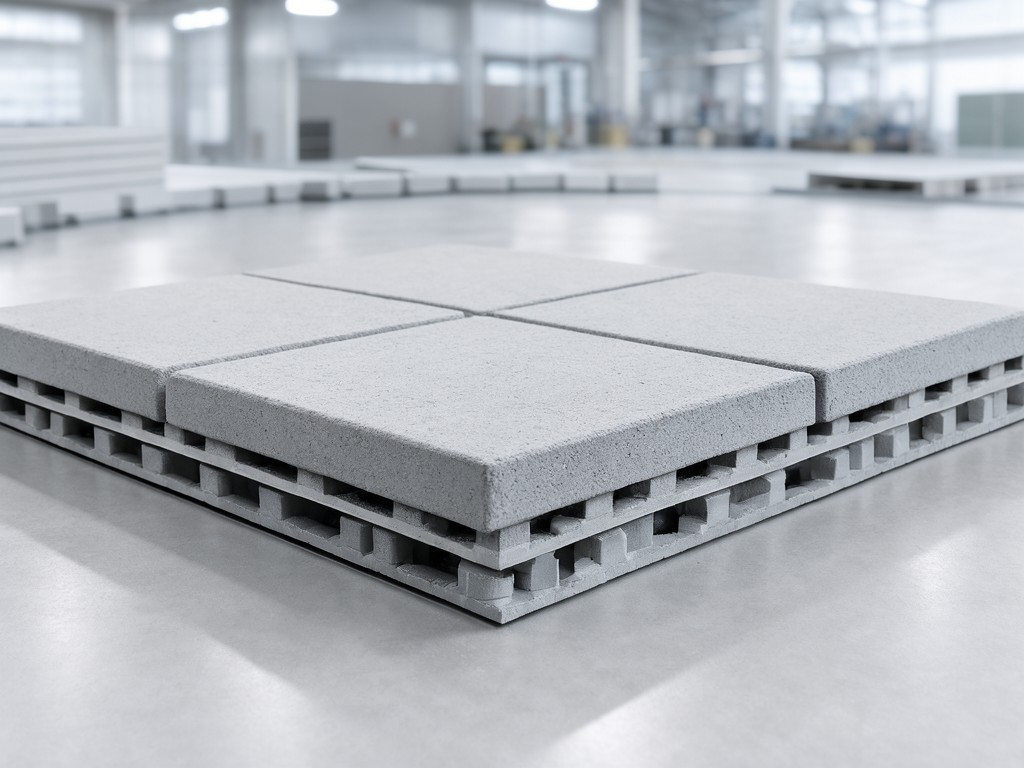
Shot-blasted or tumbled finishes provide varying aesthetic options while enhancing the coefficient of friction.
Requirements by Segment
Bulk buyers typically select specifications based on the projected load-bearing requirements of the site infrastructure.
- Residential Driveways: Focus on 60mm thickness for standard passenger vehicle loads and aesthetic color variety.
- Commercial Plazas: Requires 80mm depth to withstand frequent delivery truck traffic and shear stress.
- Industrial Loading Bays: Demands 100mm units with high-MPa compressive strength for heavy equipment operation.
Working as a Partner, Not a Supplier
Quality control is managed through batch-specific traceability. Every pallet is linked to a production code that identifies the aggregate source, mix design date, and operator shift.
We provide technical data sheets for project-approval phases, ensuring structural engineers can verify load-bearing capacities against local code requirements.
Inspection Items and Test Methods
Standard testing protocols are followed to ensure every shipment meets the contracted tolerances.
| Test Method | Frequency |
|---|---|
| Dimensional Variance Check | Every 500m² |
| Compressive Strength Test | Once per batch |
| Water Absorption Test | Quarterly audit |
Packing, Marking and Freight Configuration
Logistics planning focuses on preventing edge breakage during transit. Units are palletized on reinforced timber and secured with industrial-grade shrink wrap to prevent shifting during sea-freight transport.
Custom labeling is available for private-label distributors, including SKU tracking, weight data, and origin markings on each pallet for seamless inventory management.