custom vein cut red tiles exporter - Bulk Supply and Specification Guide
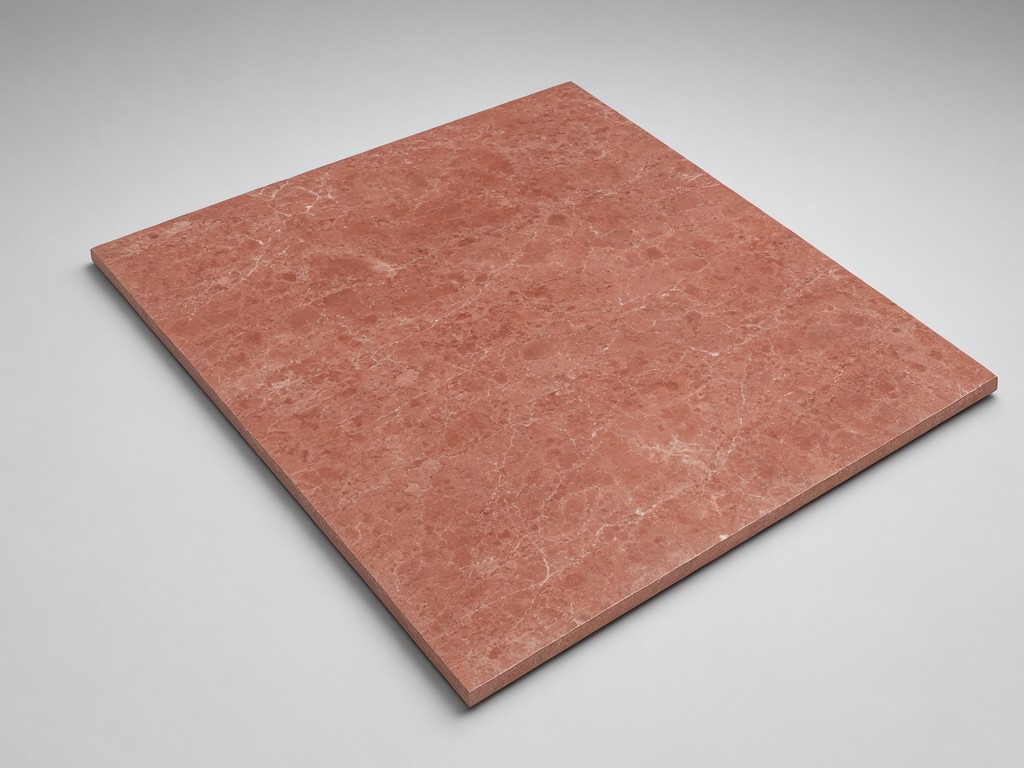
Moving from sample orders to container loads changes the focus from aesthetic appreciation to logistical consistency. When an importer sources red travertine for a large-scale commercial hospitality project, the primary risk is not the initial color hue but the structural integrity of the vein-cut across 500 square meters. Variations in the natural porosity of the stone can lead to uneven absorption rates during the sealing process if the slabs are not selected according to a uniform density profile.
What the Design Has to Balance
The design team must reconcile the visual drama of the red pigment with the mechanical limits of the stone matrix. Deep, open veins provide the sought-after aesthetic but create focal points for moisture ingress and staining if not treated correctly. If the vein density is too aggressive, the risk of the tile cracking during the thermal-expansion cycle increases, especially in outdoor installations.
Cost-efficiency is found in matching the finish grade to the exposure zone. A matte-honed finish hides minor natural variations and surface wear, whereas a highly polished surface requires a higher-grade stone to prevent visible scratching from grit-borne foot traffic.
How It Performs in Use
In a commercial environment, red travertine is judged by its resistance to abrasion and its ability to maintain color saturation. Because it is a porous calcareous rock, the "feel" of the surface is dictated by the sealer. Without a professional-grade penetrating sealer, the red tones can dull as the stone breathes, leading to an uneven appearance within six months of installation.
Maintenance Requirements
- Neutral-pH cleaners only to prevent the etching of the calcium carbonate surface.
- Re-sealing every 12-24 months depending on foot traffic and UV exposure.
- Immediate removal of acidic spills to avoid permanent chemical burns on the vein structures.
How It Is Built and What That Changes
The manufacturing process begins with precision block-cutting using diamond-wire saws to isolate specific red strata. Unlike random-cut methods, the vein-cut process slices perpendicular to the natural growth lines to expose the linear patterns. This method creates a more structurally stable tile but increases the waste rate during production, as not every block contains the desired pattern density.
Post-cutting, the tiles are honed, polished, or tumbled. A honed surface removes the natural pits, creating a flat plane suitable for precision installation, while a tumbled finish leaves the edges rounded to resist chipping during transit and site handling.
| Option | Surface Characteristic | Best Application |
|---|---|---|
| Honed Red | Flat, matte, non-reflective | High-traffic indoor flooring |
| Polished Red | High-gloss, deep color | Wall cladding, accent features |
| Tumbled Red | Textured, aged edges | Terraces, pool decks |
What Gets Checked Before Shipment
To ensure batch uniformity, every shipment undergoes dimensional checks to prevent lippage. We measure thickness to a tolerance of ±0.5mm across the entire order to ensure a flat-set installation. Water absorption tests are also performed on random samples to verify that the stone density meets the requirements for the specific regional climate.
Stock Availability and Reorder Planning
During a private-label launch with a fixed ship date, the primary bottleneck is the quarry yield. Because red travertine is a natural product, the specific vein density cannot be replicated exactly in different years. We recommend a 15% over-order for the initial phase to account for breakage and to ensure color-matching across the entire project area.
Setup, Use and Replacement Parts
Installation requires a thin-set mortar with modified polymers to prevent staining of the back of the tile. If a tile cracks post-installation, replacement must be sourced from the same batch number to avoid color shifting, as natural stone tones vary significantly between extraction cycles.
Need custom technical data for your specific project volume?
Request a Technical Consultation and Bulk Quote