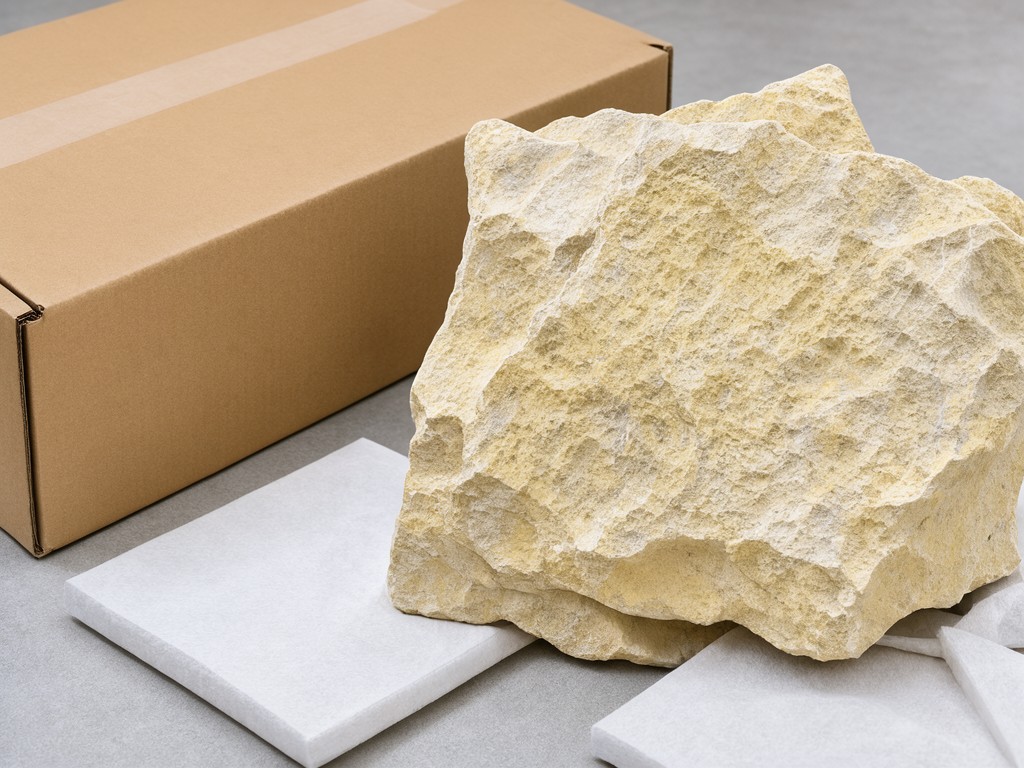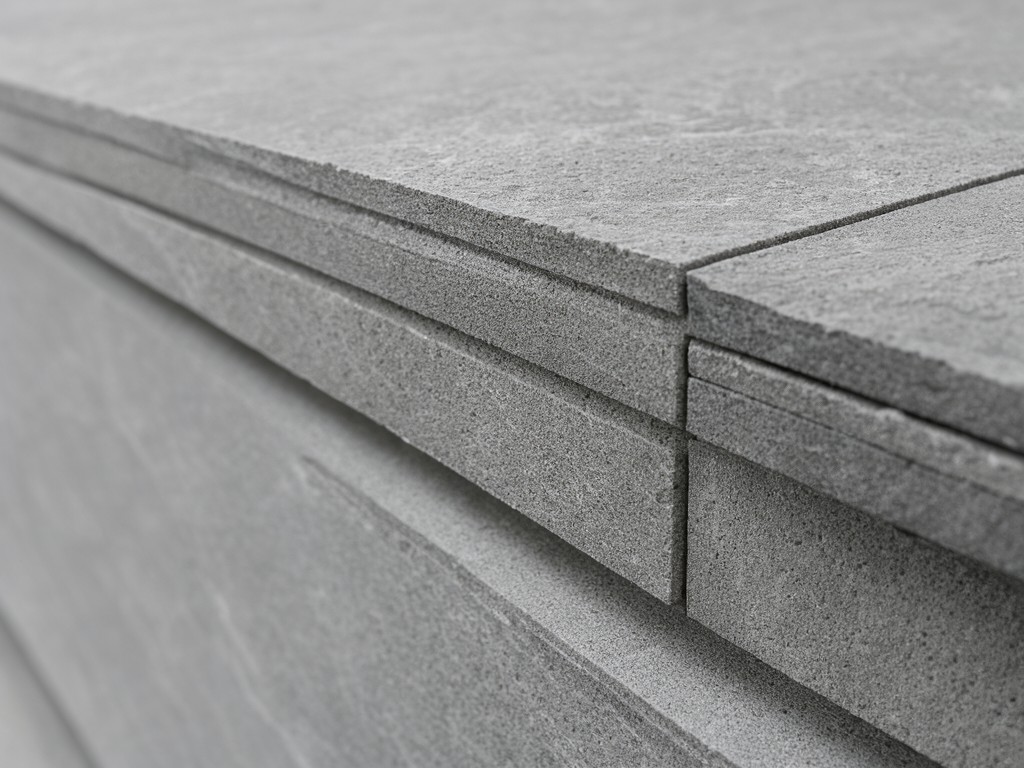
Split-face tolerance and gauging drive the unit economics of a rustic slate programme. Tighter thickness tolerances reduce bedding adhesive waste and site rejection rates, but increase split waste at the quarry. For private-label programmes, the decision point is usually whether the buyer pays for machine-gauged slate or accepts natural split variation and builds the allowance into installation specifications.
Specifying custom rustic slate product top supplier for Wholesale and OEM Orders
Scope of Supply and Physical Form
Most quality disputes start with a consistency gap. A pallet of rustic slate can look uniform on the sample board and arrive with thickness deviations that force installers to grind backs or double up on adhesive. The physical form—split-face slabs, gauged tiles, or ungauged riven stock—sets the tolerance band before a single piece leaves the quarry.
Ungauged slate costs less per square metre but demands thicker bedding and more on-site sorting. Gauged slate adds machine calibration and split waste, yet it ships closer to a fixed millimetre band and cuts installation callbacks. The supplier selection rule is to match the tolerance to the installer’s crew skill and the project’s adhesive budget, not to default to the cheapest split.
What Actually Determines Performance
Returns usually trace back to the same weak point: a thin edge or an undersplit corner that spalls under foot traffic or freeze-thaw cycling. Natural slate performs according to its cleavage quality, density, and water absorption rate, not its visual grade. A rustic face that hides colour variation can still fail if the bedding plane splits unevenly through the thickness.
Water absorption below 0.5 percent typically suits exterior cladding, while higher absorption stock is better reserved for interior walls and dry hearths. Flexural strength and abrasion resistance determine whether a floor tile survives grit loading or dulls after one season. Buyers should specify the test conditions that matter for the end use before agreeing to a batch.
Size, Weight and Specification Range
Stock slabs usually sit between 10 and 30 millimetres thick, with custom gauging available to tighter bands at added split loss. Weight scales directly with density and thickness, which affects pallet loading and container weight limits. The table below lists the customisation options a top supplier should offer without forcing a product redesign.
| Option | Standard Range | Custom Range | Lead-Time Effect |
|---|---|---|---|
| Thickness | 10–20 mm ungauged | 8–40 mm gauged to ±2 mm | +2–5 days for gauging |
| Dimensions | 300×300 to 600×600 mm | up to 1200×600 mm slabs | +3–7 days for large slabs |
| Surface finish | Natural cleft / rustic split | Brushed, honed, or flamed | +4–8 days for secondary finish |
| Edge treatment | Sawn or split edge | Chamfered, bullnose, or bevelled | +2–4 days per edge profile |
| Backing | None or fibre mesh | Full mesh or epoxy resin backing | +1–3 days; affects adhesive choice |
Who Uses It and Where It Matters
Distributors and importers place this stock with roofing contractors, flooring contractors, and landscape specifiers who need rustic slate for exterior cladding, internal floors, hearths, and wall panels. The product has to survive site handling, freeze-thaw cycles, abrasive foot traffic, and thermal shock without delamination or edge spalling. A private-label buyer matching an existing specification usually prioritises batch consistency over the lowest split price, because a mismatched batch forces rework at the importer’s warehouse.
OEM and ODM Programme Structure
OEM orders replicate a buyer’s existing slate specification without redesigning the product, while ODM work adapts thickness, finish, or slab size to a new application. The critical step is sample approval against a sealed reference batch, because visual memory fades between production runs. Packaging, pallet configuration, and batch traceability are treated as specification items, not afterthoughts.
Volume Planning and Lead Time
Lead time moves with gauging requirements and slab size. Standard ungauged stock can ship from quarry stock within two to four weeks, while gauged or finished slabs typically need four to eight weeks plus ocean freight. Container loading plans must account for slate density; a full container of 20 mm material approaches weight limits before it reaches volume limits.
Keeping Repeat Orders Supplied
Repeat orders fail when the quarry seam changes or the previous batch is fully allocated. A supplier holding reserve stock and recording batch data—source seam, split date, thickness band—can match a reorder within the same visual and dimensional tolerance. Total cost of ownership favours a slightly higher unit price when it cuts warranty claims and replacement shipments.
Setup, Use and Replacement Parts
Setup begins with a sound substrate and the correct bedding adhesive for the slate’s absorption rate. Individual slates can be lifted and replaced without disturbing surrounding stock, which is the main advantage of modular slate over poured surfaces. Routine care is limited to pH-neutral cleaning and periodic resealing where the specification calls for a surface treatment.
Request a tooling review and sample approval against your current slate specification.
Start tooling review