Custom Outdoor Granite Flagstone Paving: Specification, Ordering and Quality Notes
Procuring stone for heavy infrastructure projects depends on the mineral density and porosity rate of the granite source. Low-grade variants often exhibit high spalling rates when freeze-thaw cycles degrade the surface within the first 24 months of outdoor exposure. Our manufacturing process focuses on high-density igneous rock to ensure the compressive strength remains consistent under high-load pedestrian or light vehicle traffic without micro-fissuring.
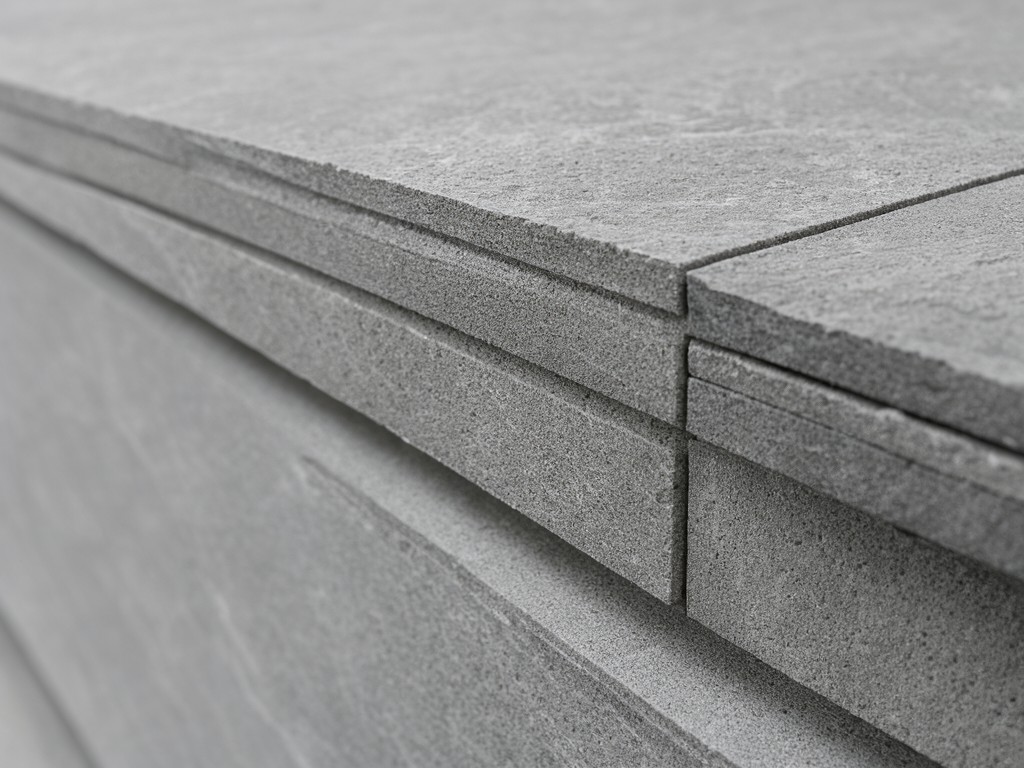
Technical Note: For high-traffic commercial zones, we recommend a minimum thickness of 30mm to prevent structural shearing and uneven surface slippage caused by thermal expansion and sub-base shifting.
Measured Performance
Surface finish is judged by the coefficient of friction (COF) under varying moisture levels. While honed honed finishes provide a sleek aesthetic for residential landscaping, they often fail safety audits in public spaces when exposed to rain or ice. We calibrate the flamed and bush hammered textures to maintain a high grip rating without compromising the structural integrity of the flagstone face.
| Finish Type | Slip Resistance | Primary Application |
|---|---|---|
| Honed | Low-Medium | Interior / Dry Patio |
| Flamed | High | Public Pedways |
| Bush Hammered | Extreme High | Steep Slopes / Industrial |
Matching the Stone to the Buyer's Need
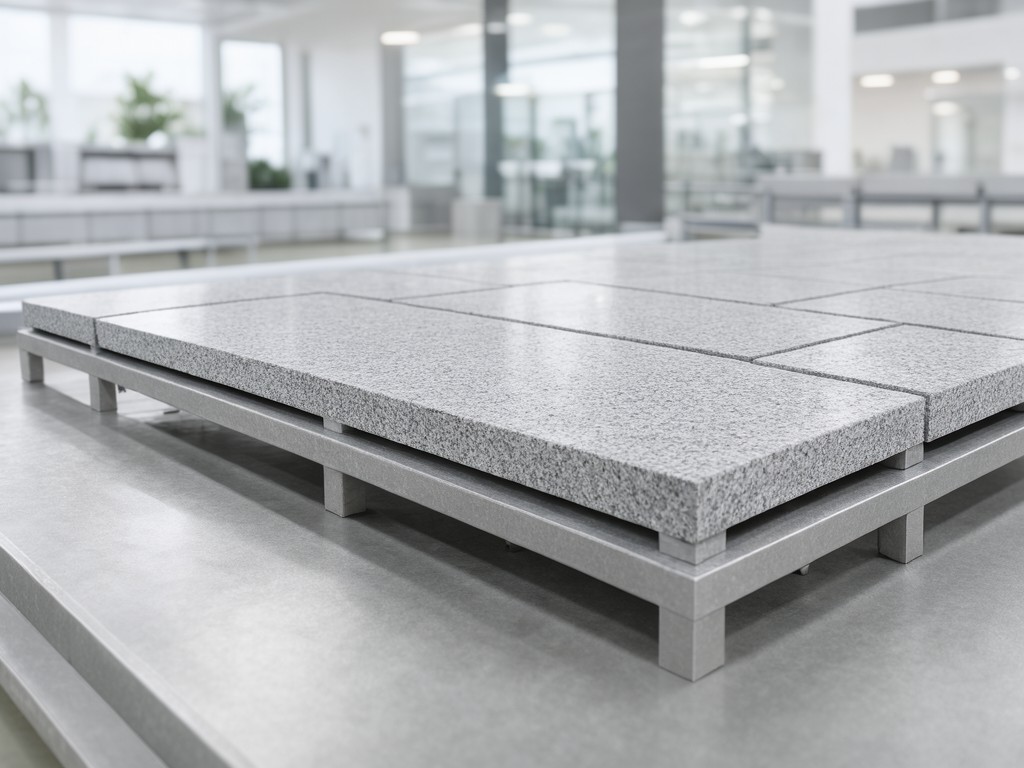
Project managers must balance color variance against cost-per-square meter. Natural granite varies by quarry vein, which can lead to batch-matching issues in large-scale retail environments if not managed. We utilize batch-traceability protocols to ensure a ±5% tonal tolerance across a single container-load order.
Wholesale Distribution
Focus on bulk-volume pallet sizing and standardized square-cut shapes to minimize waste for retail-ready inventory.
Architectural Spec
Focus on custom dimensional tolerances and specific mineral-profile matching for high-end commercial developments.
Requirements by Segment
Large-scale importers require rigorous protection against salt-spalling in coastal climates. If the stone absorption rate is too high, salt crystallization within the pores will cause surface delamination. We test every batch for water absorption rates to ensure they remain below the critical industry threshold.
- Dimensional Consistency: Tolerance of ±2mm on length-cut edges to ensure uniform joint widths.
- Load Rating: Minimum compressive strength of 150MPa required for commercial-grade paving.
- Freight Configuration: Reinforced heat-stabilized crates to prevent edge fracture during transoceanic transit.
OEM and ODM Structure
Custom tooling for specific paving patterns requires an initial lead time for saw-blade calibration. For private-label brands, we offer laser-etched batch identification on the underside of each stone, ensuring on-site de-manufactured stock can be easily distinguished from standard retail units.
Lead times for custom orders typically range from 6 to 10 weeks depending on the quarry availability and the complexity of the surface treatment (e.g., multi-directional flamed finishes).
Care, Storage and Service Life
Maintenance involves simple pH-neutral cleaning to prevent mineral staining. Unlike porous sandstone, granite is resistant to acid etching, but the joints remain the primary point of failure. Proper sub-base installation with polymeric sand prevents the weed growth that often leads to mechanical displacement over time.
Service Life: Properly installed, granite flagstone exceeds a service life of 50+ years, significantly outperforming synthetic or softer stone alternatives in high-wear environments.