custom driveway paving stone Company: What Buyers Check Before Ordering
Structural integrity in heavy-duty paving depends on the relationship between compressive strength and water absorption rates. Low-density units often suffer from spalling after freeze-thaw cycles because moisture penetrates the pores and expands, deforming the surface layer. Procurement teams must evaluate the weight-per-meter to ensure the material remains dimensionally stable under the shear stress of vehicle-turning maneuvers.
How It Is Built and What Changes
The manufacturing process dictates the final surface friction and color uniformity of the stone. Vacuum-pressing methods reduce air pockets, resulting in a denser matrix that resists oil penetration and chemical staining. Conversely, cast-in-place methods offer lower costs but introduce higher porosity, which increases the risk of moss growth and surface degradation.
Material Density
High-density aggregate mixes provide better load distribution, extending the service life of the installation in commercial-grade environments.
Surface Finish
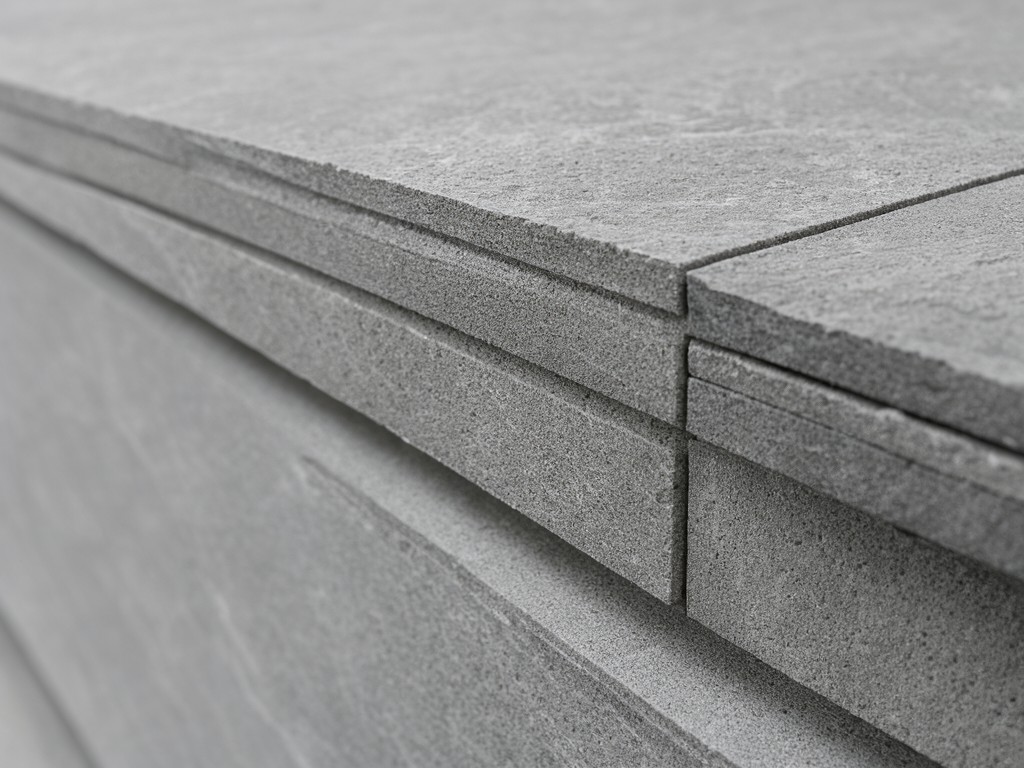
Bush-hammered or textured increase slip resistance in wet conditions, meeting safety requirements for inclined surfaces.
Comparing Two Standard Configurations
| Parameter | Standard Residential | Reinforced Commercial |
|---|---|---|
| Compressive Strength | 35 MPa | 60+ MPa |
| Water Absorption | <6% | <3% |
| Standard Thickness | 60mm | 80mm |
Buying Mistakes That Lead to Returns
Dimensional variance is the primary cause of installation failure at scale. If stones from a single batch do not align within a ±2mm tolerance, the joint sand lines become uneven, leading to water pooling and premature shifting. Buyers often overlook the batch-consistency, resulting in visible color shifts across a large project area when secondary orders arrive later.
- Accepting units without verifying the frost-resistance rating for local climates.
- Ignoring the coefficient of thermal expansion in large-format pavers.
- Failing to specify the UV-stabilization of pigments for direct-exposure areas.
How Consistency Is Held Across Batches
Batch traceability is maintained through rigorous aggregate sourcing and automated pigment dosing. By stabilizing the moisture content in the raw mix, the factory ensures that the curing rate remains uniform across different production runs. This prevents the "shading" effect where different sections of a driveway exhibit different tonal hues due to varying chemical reactions.
What Gets Checked Before Shipment
Pre-shipment inspection focuses on mechanical integrity and dimensional accuracy. Every pallet is subjected to a visual impact test to ensure no hairline fractures exist that would manifest once load-bearing. Weight checks are performed against the manifest to ensure the logistics plan handles the maximum load capacity without risking breakage.
Stock Availability and Reorder Planning
Lead times are dictated by the curing cycle of the concrete composite. High-volume orders typically require a 4-week window to allow for full structural development before the units are moved. Maintaining a buffer stock of standard geometries allows for immediate repairs or matching expansions without waiting for new production cycles.