China Natural Slate Stone Paving Slabs Company: Specification and Ordering Notes
Procurement of natural slate paving requires an understanding of the geological density and the cleavage planes of the specific quarry used. Unlike manufactured alternatives, these slabs are split along their natural bedding planes, which creates a unique textured surface but also introduces inherent variations in surface flatness. Buyers must evaluate the water absorption rate against the intended environment; high-porosity slabs may suffer from frost-thaw degradation in colder climates if not treated with a sealant.
What This Product Is and Where It Fits
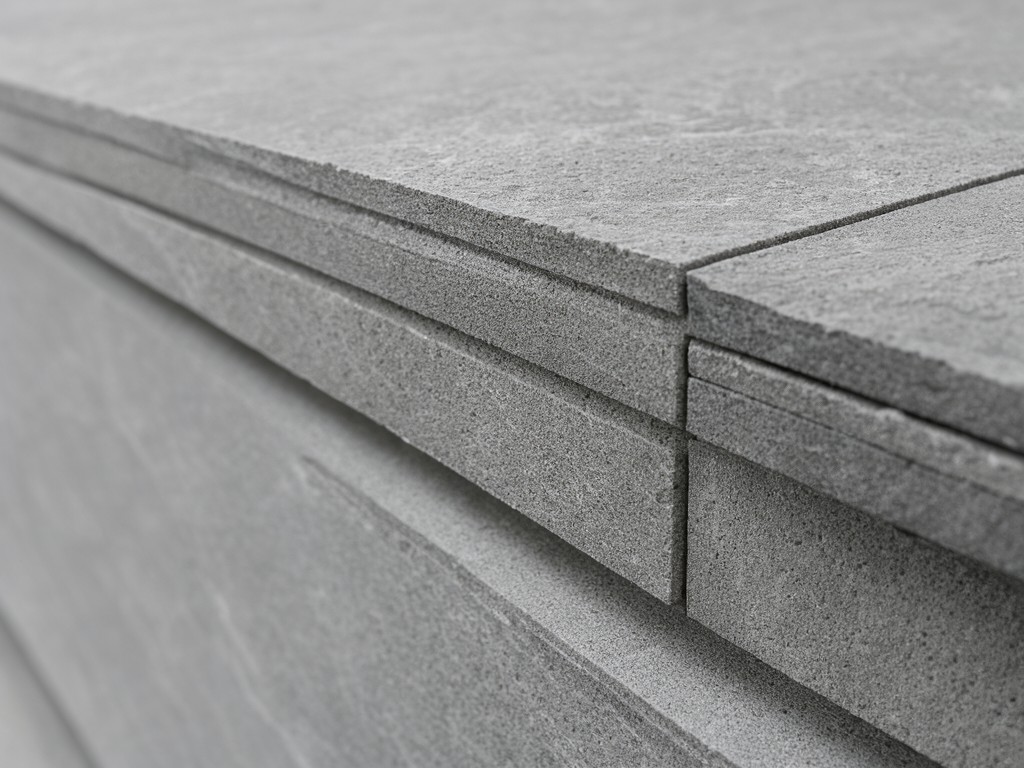
These slabs are engineered for high-traffic pedestrian zones where slip resistance is the primary safety metric. The split-face finish provides a high coefficient of friction even when saturated, making them suitable for pool surrounds and public walkways. For commercial driveways or light vehicle areas, the 30mm to 50mm thickness provides the necessary structural modulus to prevent cracking under point loads or subbase movement.
| Parameter | Standard Range | Testing Metric |
|---|---|---|
| Slab Thickness | 20mm - 50mm | Load-bearing capacity |
| Surface Finish | Split-face / Honed / Brushed | Slip resistance (R-value) |
| Water Absorption | < 0.5% - 2% | Frost resistance rating |
| Dimensional Tolerance | ±3mm to ±5mm | Grout-line alignment |
What the Design Has to
Failure via delamination in low-grade slate occurs due to internal stress release during the extraction process. If the stone is quarried too quickly, the layers separate, leading to surface flaking within two winter cycles. Our process involves slow moisture-controlled curing to ensure the mineral structure remains stable before primary cutting, reducing the risk of slabs arriving with internal hairline fractures.
Color consistency is the most frequent complaint in large-scale developments. Because slate is a natural metamorphic rock, even the same quarry face can produce tonal shifts. To mitigate this for commercial architectural projects, we provide batch-traceability for every shipment, ensuring that the visual profile remains uniform across the entire installation area.
Construction Method and Its Effect
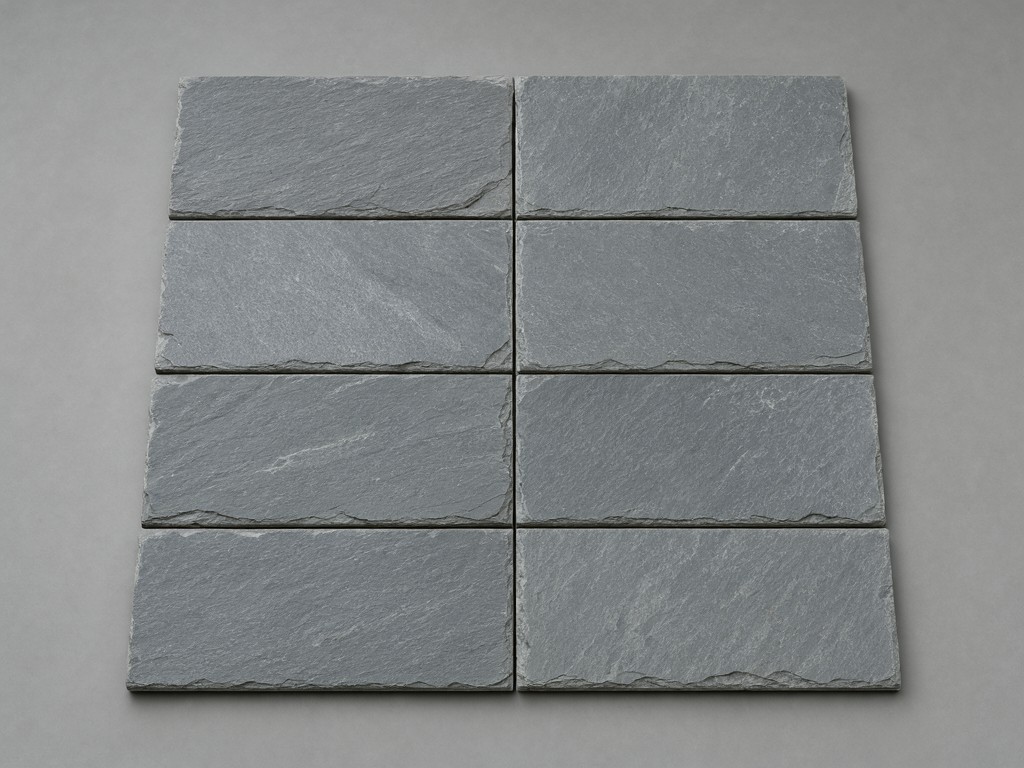
Hand-splitting versus machine-sawing determines the final aesthetic and the structural integrity. Hand-split slabs preserve the natural ruggedness of the stone but result in irregular edges that require more skilled jointing. Machine-cut edges offer precise 90-degree corners, allowing for modern linear patterns with narrower grout joints, but this process can sometimes stress the edges if the blade speed is not properly calibrated.
How to Choose Before Requesting a Quote
Selection begins with the exposure requirements. For interior use, a 20mm honed slate is sufficient when installed on a mortar bed. For exterior terraces subject to thermal shock, a 30mm split-face slab is mandatory to prevent warping from thermal expansion.
- Determine the required load rating for pedestrian vs. vehicular traffic.
- Identify the necessary slip resistance rating for safety-compliant zones.
- Confirm the edge profile (natural-riven vs. rectangular)
- Specify the allowable dimensional variance for grout-planning.
Volume Planning and Lead Time
Lead times fluctuate based on quarry extraction cycles and global shipping de-congestion. Standard pallet sizes are typically held in stock for 2-4 week dispatch, while custom-cut dimensions or large-format orders (over 1,000 square meters) require a minimum 8-week window to account for precision cutting and quality inspection.
Keeping Repeat Supplied
To maintain material matching across multi-phase projects, we recommend securing the total volume in a single production run. Subsequent orders from different quarry faces may result in different mineral compositions and tonal variations that are impossible to reconcile post-installation.