Specifying Best Price Top-Quality River Pebble Stone Exporter for Wholesale and OEM
Quality disputes in bulk procurement often start with consistency gaps between visual samples and actual structural density. When sourcing for large-scale landscaping or architectural projects, the primary failure mode is not the aesthetic appeal, but the rate of material degradation under thermal stress and mechanical abrasion. Low-grade exports frequently exhibit high porosity, leading to water absorption that causes internal fracturing and surface cracking after a single season of freeze-thaw cycles.
What the Design Has to Balance
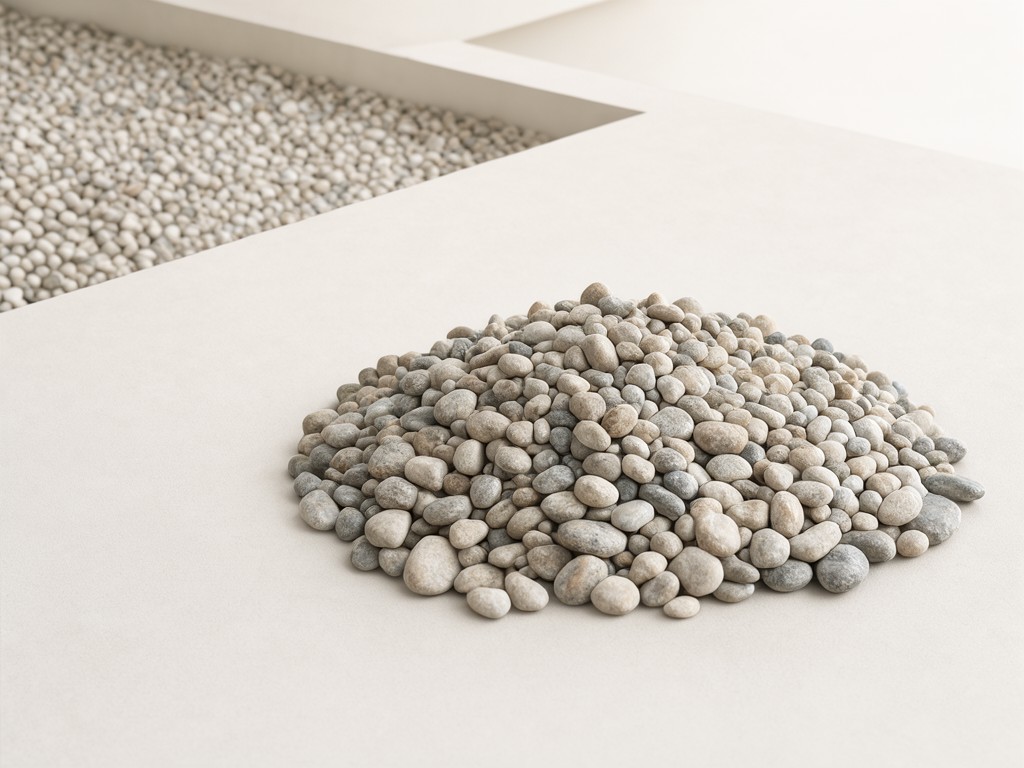
The trade-off in river pebble selection usually centers on the degree of tumbling versus the natural edge retention. Mechanically tumbled stones provide a uniform finish that prevents snagging, but excessive processing can introduce micro-fractures that compromise the structural matrix. Natural-worn stones maintain higher structural integrity but require more rigorous sorting to achieve the uniform size distribution necessary for consistent-set-concrete applications.
Weight consistency is the critical metric for logistics cost-efficiency. A batch with high "fines" content (small dust particles) increases shipping weight per usable meter and degrades the adhesive bond in resinous mixes. We grade by sieve analysis to ensure that 95% of the material falls within the specified millimetric diameter range.
| Parameter | Standard Range | Testing Method |
|---|---|---|
| Diameter Range | 10mm - 60mm (Custom) | Sieve Analysis |
| Water Absorption | < 2.5% by weight | Vacuum Sat |
| Abrasion Resistance | < 15% loss | Loser Test |
| Surface Hardness | Mohs 6-7 | Micro-indentation |
How It Performs in Use
Performance in exposed environments depends on the chemical stability of the stone. For outdoor decorative aggregates, the primary concern is UV-induced fading of any coatings or mineral leaching in acidic soil. Our untreated river pebbles are de-cemented minerals that maintain color saturation even under high-exposure cycles.
In resin-bound applications, the surface texture of the pebble dictates the bond strength. Over-polished stones often lack the necessary mechanical interlock, leading to surface slip under pedestrian loads. We provide a semi-matte finish for projects requiring high-friction coefficients without sacrificing the natural river aesthetic.
How to Choose Before Requesting a Quote
- Identify the primary load-bearing requirement: structural fills require higher hardness ratings, while decorative paths can prioritize color variety.
- Determine the environmental exposure: coastal projects require low-porosity stones to prevent salt-crystallization-induced internal spalling.
- Specify the packaging format: bulk flex-bags are standard for industrial use, whereas retail-ready bags require moisture-barrier-poly liners.
- Confirm the size distribution tolerance: narrow-range grading increases cost but ensures-mixed grading is more cost-effective for general fill.
Inspection Items and Test Methods
Every batch undergoes a multi-stage verification to ensure the shipment matches the technical datasheet. We perform visual inspections for mineral inclusions—such as soft veins of shale—which would lead to premature failure under mechanical load.
Batch traceability ensures that if moisture content varies during transit, the specific quarry source can be identified and adjusted accordingly. This mitigates the risk for large-scale infrastructure projects.