B2B Outdoor Paving Stone Manufacturer - Bulk Supply and Specification Guide
Replacement rates dictate the total cost of ownership more than the initial price per square meter. When a batch exhibits a dimensional variance of even 2mm across a 5,000-unit order, the resulting sub-base shifting accelerates, leading to uneven surfaces and increased labor costs during site rectification. Procurement officers often focus on the FOB price while neglecting the structural failure caused by inconsistent water absorption and compressive strength fluctuations between shipments.
The Problem Buyers Keep Paying For
Low-grade manufacturing utilizes high-porosity aggregates with insufficient cement-to-sand ratios, resulting in rapid ingress. In cold climates, water enters the capillary structure; during freeze-thaw cycles, the resulting internal pressure leads to surface spalling and delamination. This is not an aesthetic failure but a mechanical breakdown of the material matrix that reduces the service life from decades to seasons.
What Actually Determines Performance
The longevity of outdoor paving is governed by the density achieved during the casting process and the chemical curing environment. High-frequency vibration tables eliminate air pockets, creating a dense surface that resists salt penetration and chemical staining. This density ensures that the abrasion resistance remains high after 5,000+ cycles of vehicle or heavy-pedestrian traffic.
| Performance Metric | Standard Cast Grade | Industrial-Grade Reinforced |
|---|---|---|
| Compressive Strength | 30-35 MPa | >60 MPa |
| Water Absorption Rate | 5-8% | <3% |
| Abrasion Resistance (ASTM) | Class 3/C4 | Class 1 or higher |

Assumptions Buyers Should Stop Making
Many distributors assume that surface color coating is sufficient for outdoor exposure. In reality, surface-only pigments fail once the top millimeter wears down due to mechanical abrasion. True durability requires integral-color pigments that are distributed throughout the mass of the concrete mix, ensuring the color remains consistent even as the stone weathers over years.
- Thickness does not correlate with load capacity; internal density is the primary factor for weight-bearing.
- Standard concrete pavers often lack the thermal expansion resistance required for extreme-temperature fluctuations in urban zones.
- Lead times are often shortened by cutting the curing cycle, which leads to internal stress cracks appearing months later.
Customisation Options and Their Limits
Customizing geometries or textures is feasible, but each modification impacts the structural integrity of the individual unit. While a sandblasted finish increases slip resistance, it also increases surface area, which can slightly elevate moisture absorption rates if the mix is not properly sealed. Custom-molded shapes with thin-profile edges require specific edge reinforcement to prevent breakage during transit.
Surface Treatments
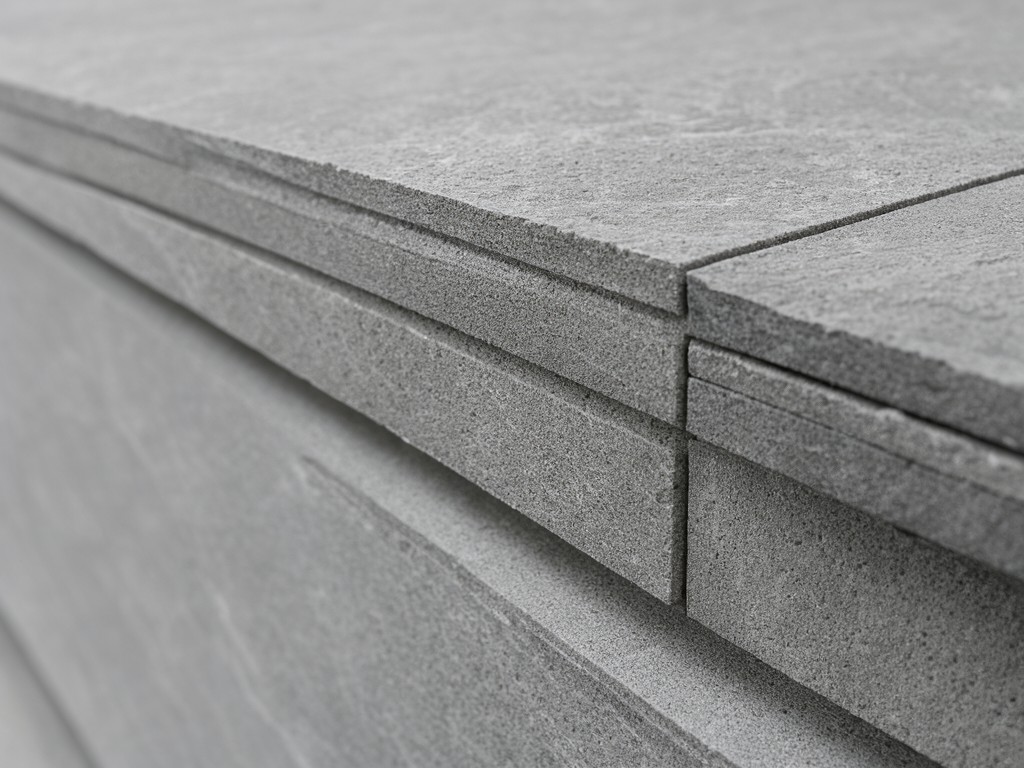
Available options include tumbled, brushed, or flamed-riven finishes. Each affects the coefficient of friction (R-value) critical for commercial safety compliance.
Material Additives
We can integrate basalt or granite aggregates for higher hardness. Note that higher-density aggregates increase unit weight, requiring recalculation of logistics costs.
Working as a Production Partner, Not a Catalogue Supplier
A reliable manufacturing partner provides batch traceability for every pallet. This allows the importer to map specific lots to project sites, simplifying warranty claims if a specific material defect is identified on-site. Beyond providing standard items, we offer technical consultation support to ensure the stone specification matches the local environmental load requirements.
What Gets Checked Before Shipment
Pre-shipment inspection focuses on dimensional stability to ensure tight-fit installation. We perform dimensional checks to ensure tolerances remain within ±1.5mm, preventing gaps in joints. Random samples are subjected to compressive strength testing to verify that the batch meets the specified MPa grade defined in the purchase order.
Export Packaging and Handling Protection
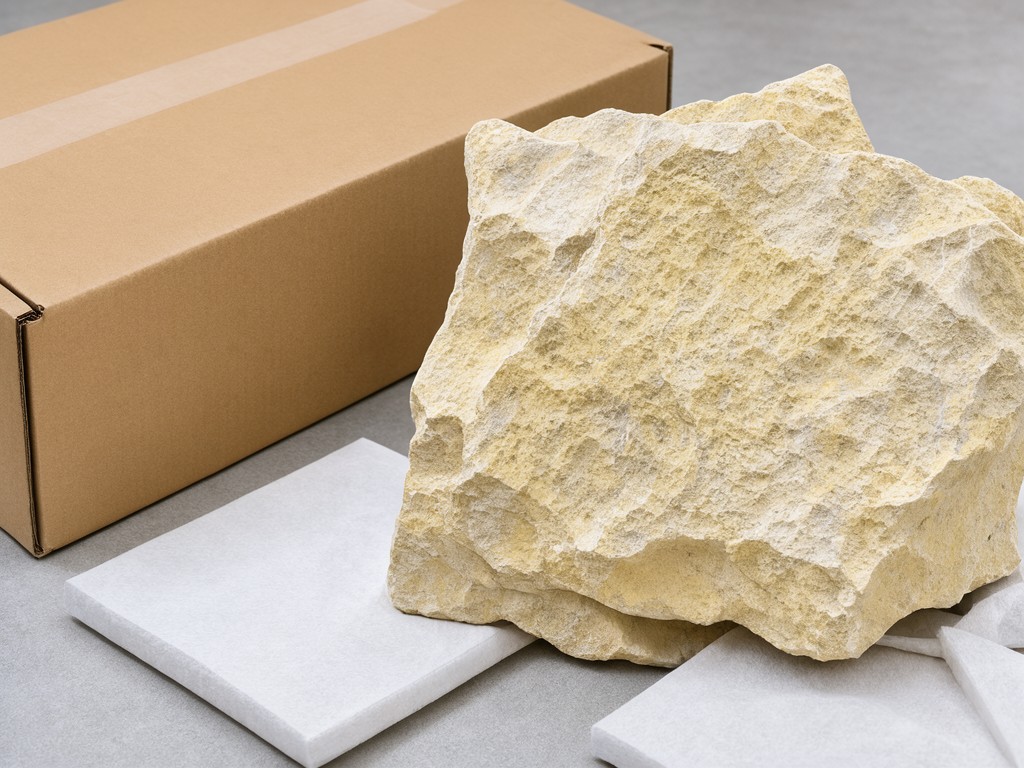
Heavy-duty paving requires specialized stabilization to prevent chipping. We utilize heat-shrink-wrapped pallets with steel strap strapping to prevent lateral movement during sea freight. For international orders, moisture-stabilized crates are used to prevent efflorescence caused by rapid temperature changes in high-humidity transit periods.
Request a Technical Specification Sheet
Get detailed material data and load capacity reports for your next bulk procurement.
Contact Our Engineering Team